HOW IT'S MADE
TRADITIONAL TECHNIQUES
MODERN DESIGNS
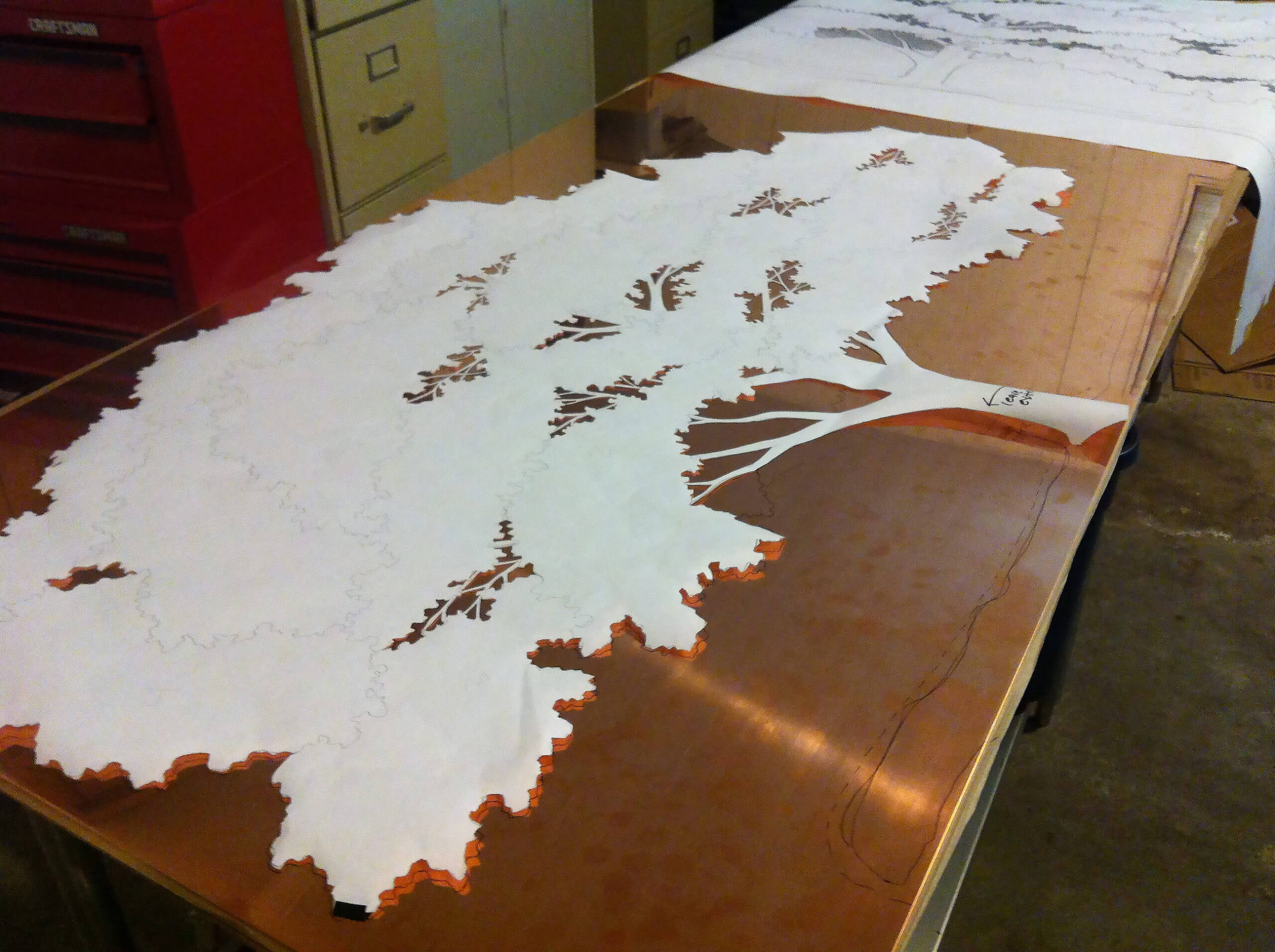
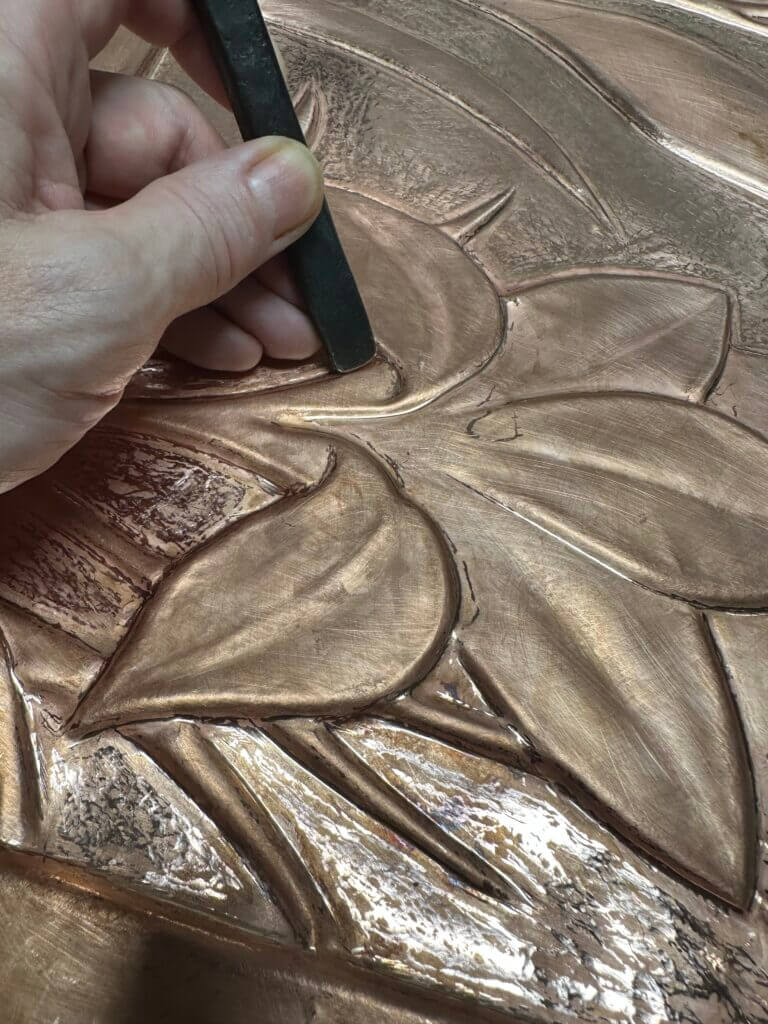
This work is made using traditional metalworking techniques that rely on hand tools and patience. Processes like forming, forging, embossing and repousse shape the metal by physically moving it, rather than removing material or building up layers. The result is real depth built into the metal itself.
Modern designs with a classical feel are created by combining these older manual methods with contemporary layouts and styles. Flat sheet and solid stock are worked gradually until the final form begins to emerge. Tool marks and surface variation remain visible as part of the finished work. This page shows some of the tools, materials and steps involved, from early shaping through finishing.

Design and Layout
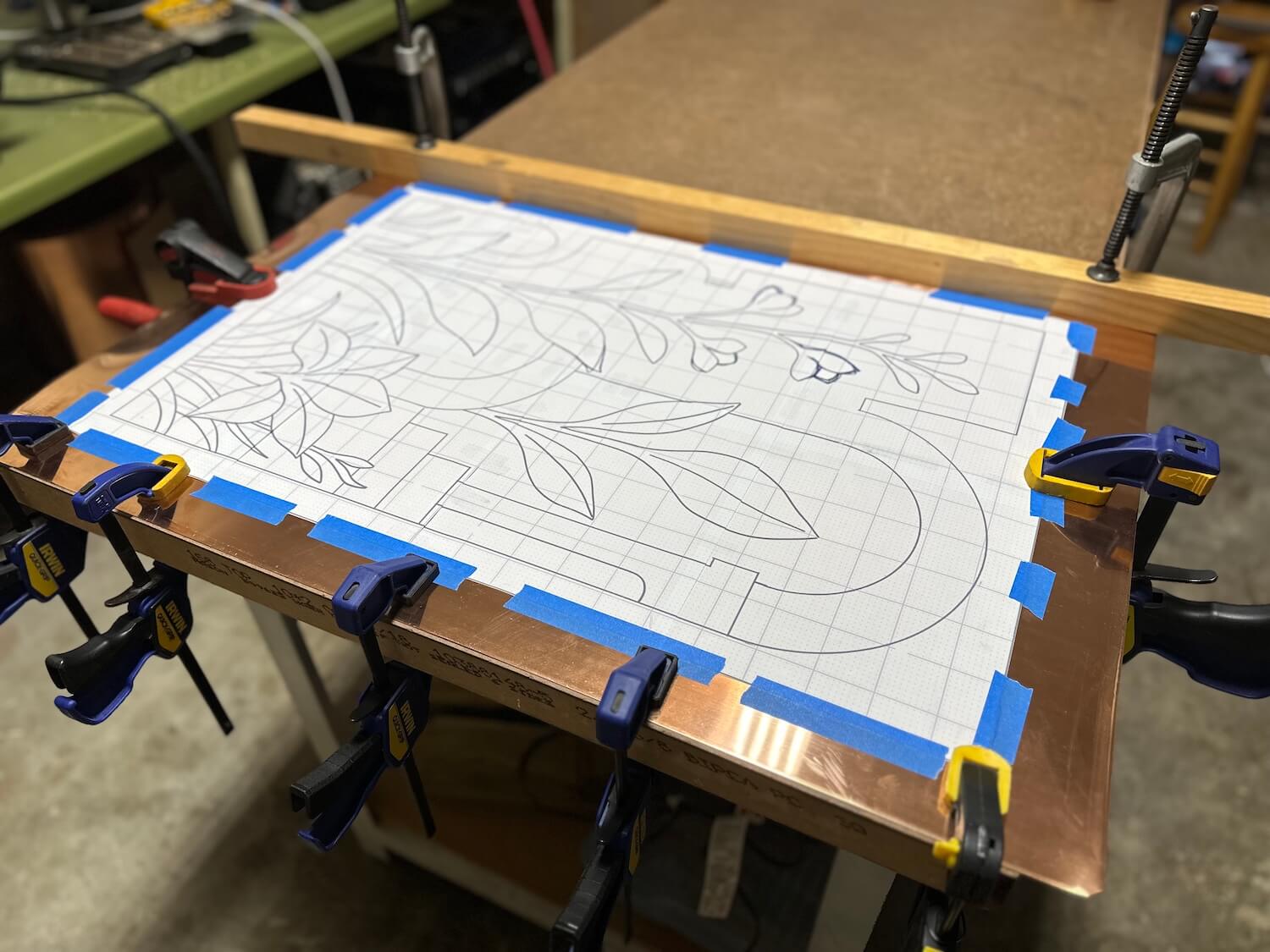
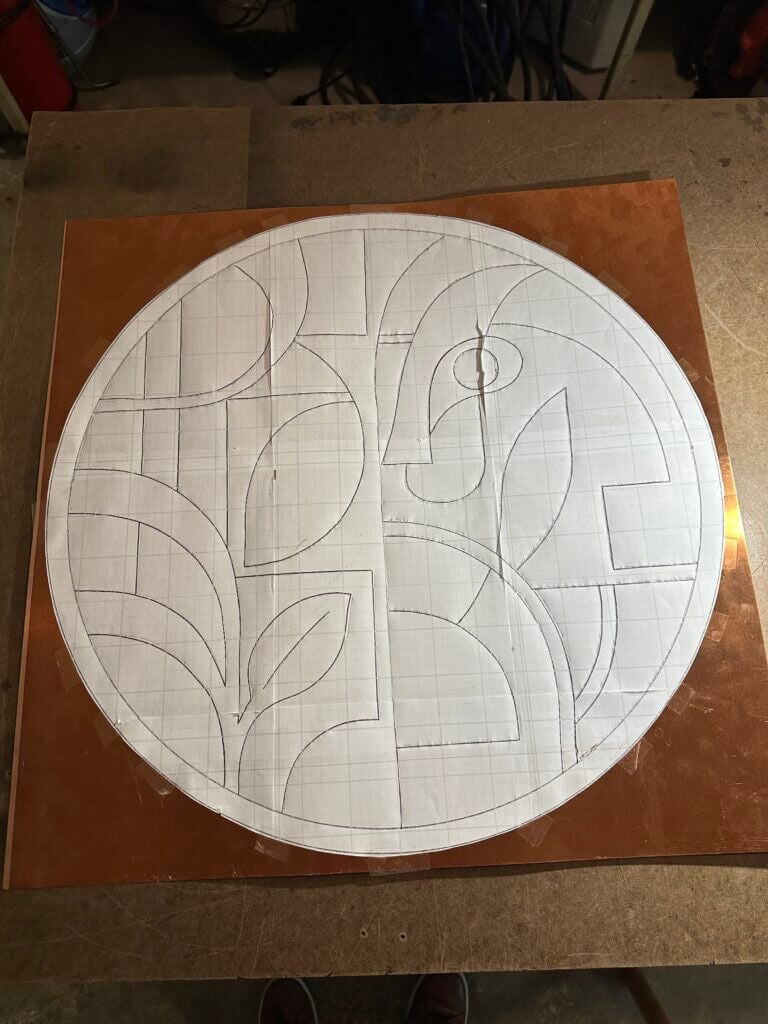
Each piece begins with a rough concept, sketch or reference image. Proportions and overall layout are established first, then the finished design is scaled to its final size. Key lines, shapes and layers are mapped out on the metal.
Shaping and Forming
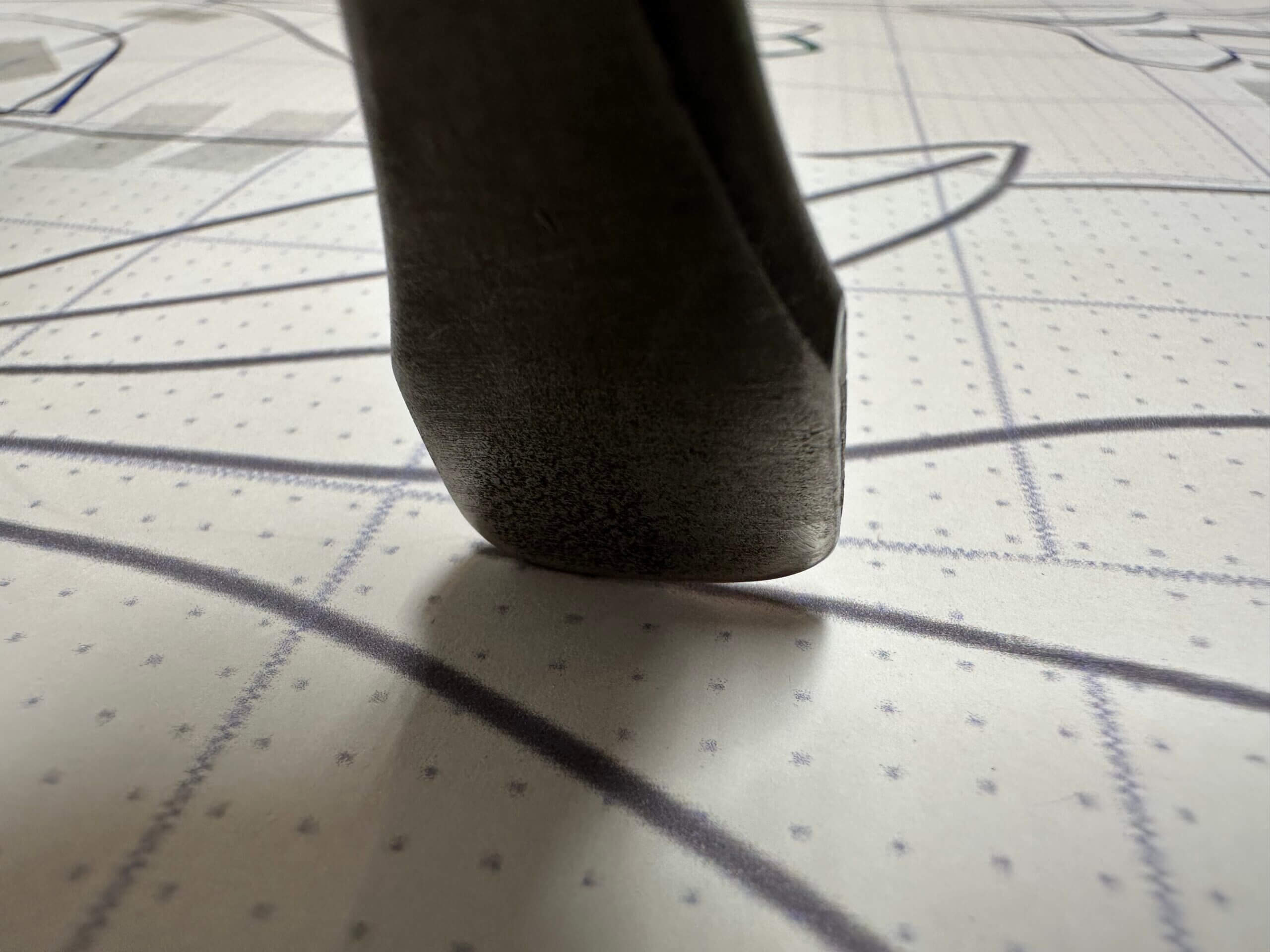
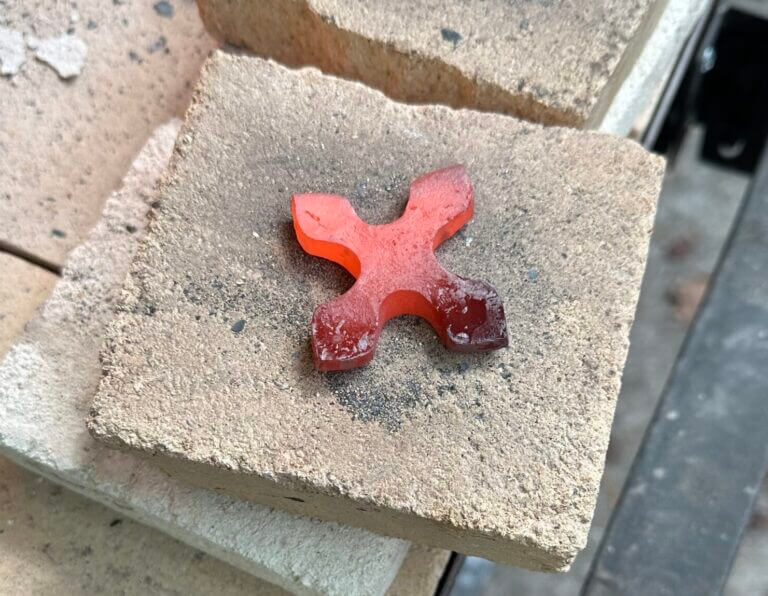
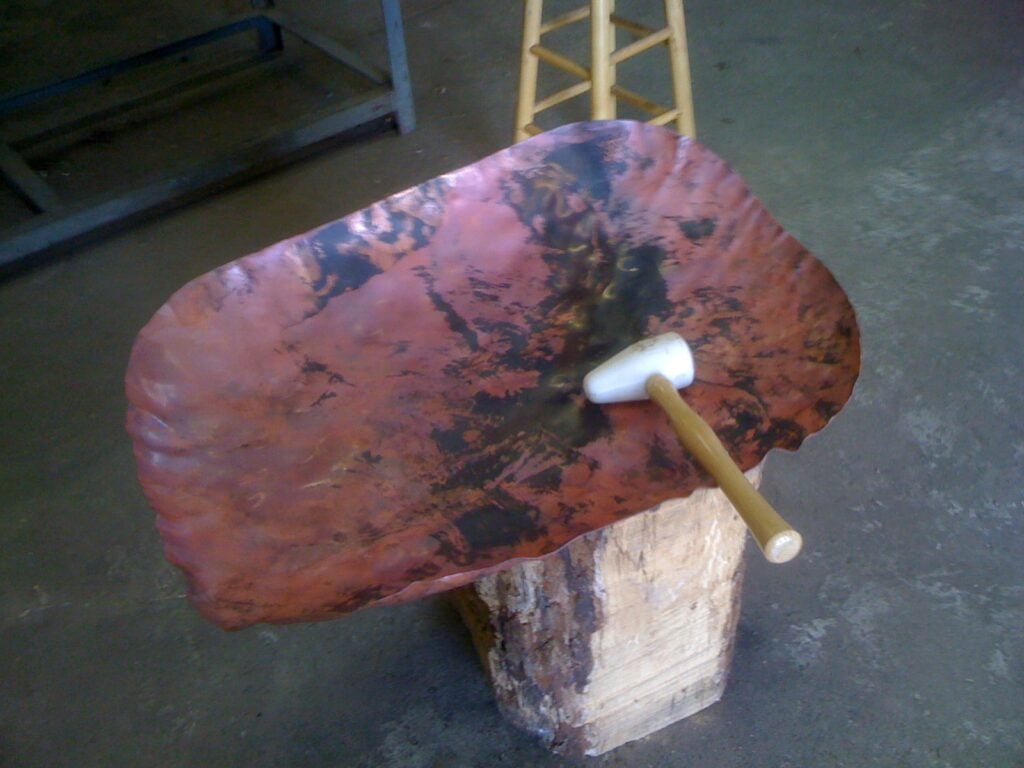
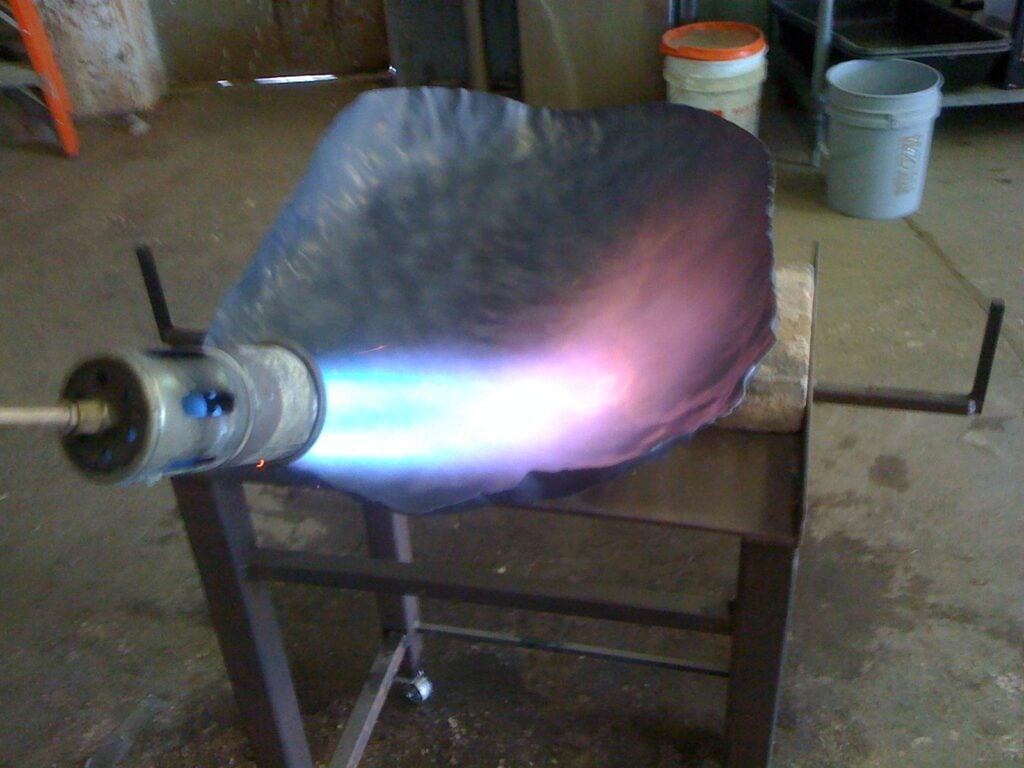
Metal is worked gradually using hand tools and traditional forming methods. It is pushed and stretched to create curves, volume and three dimensional relief. This stage establishes the depth and structure of the piece and usually involves multiple passes and repeated cycles of heating and cooling as the form takes shape.
Assembly and Welding
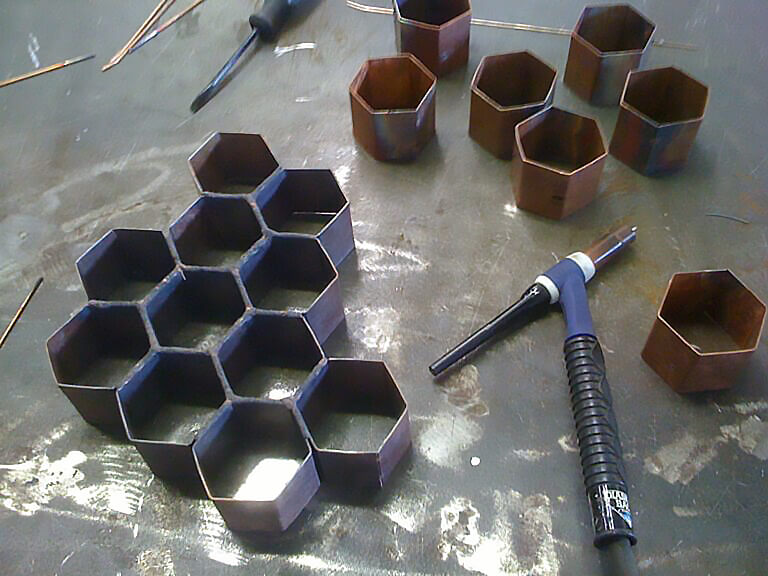
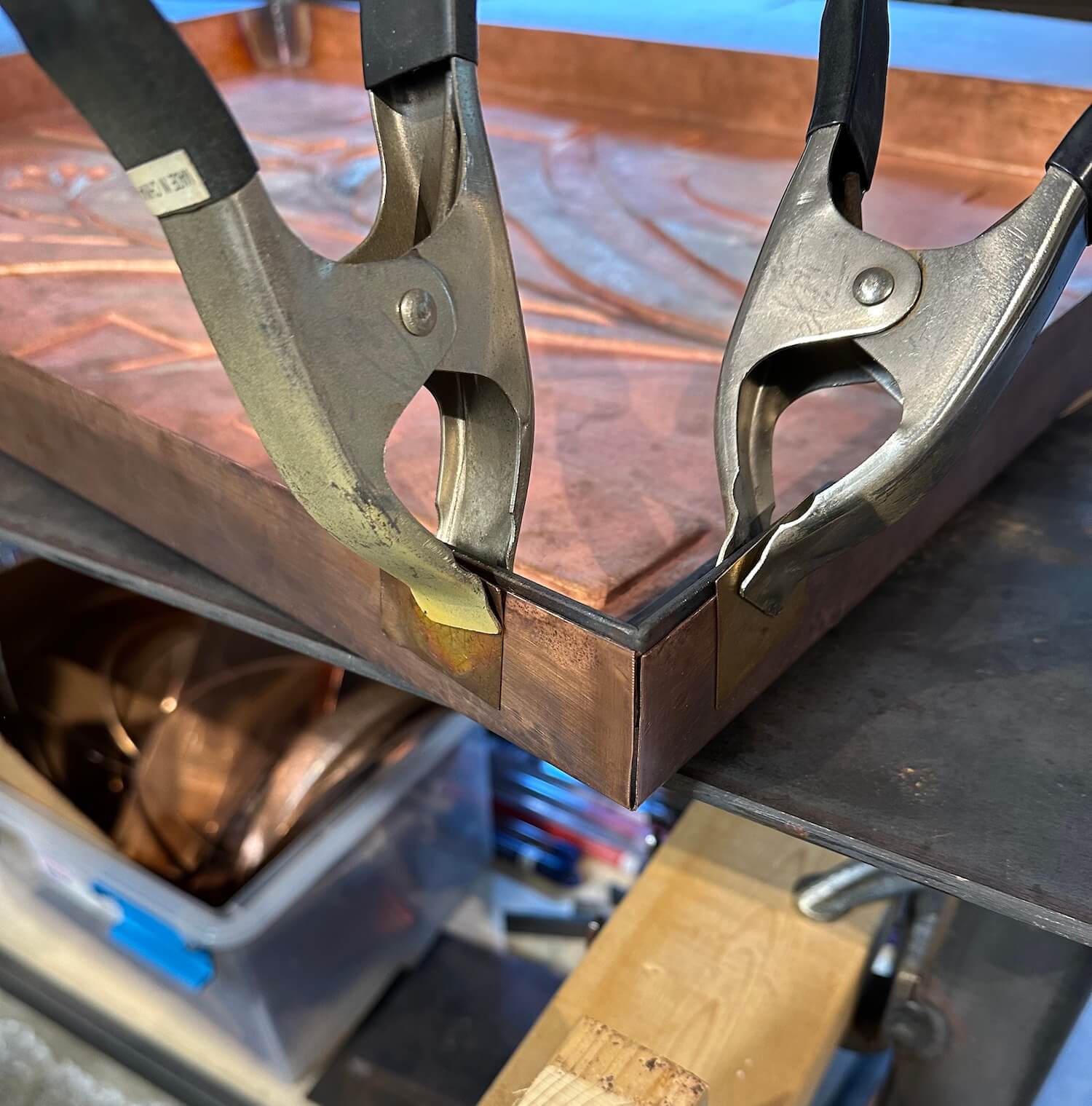
When a piece includes multiple parts, components are fitted and assembled by welding, brazing, silver soldering or with cold connections like rivets or bolts. Structural supports are added as needed for strength and stability. Edges and seams are cleaned up for a solid fit and neat finish.
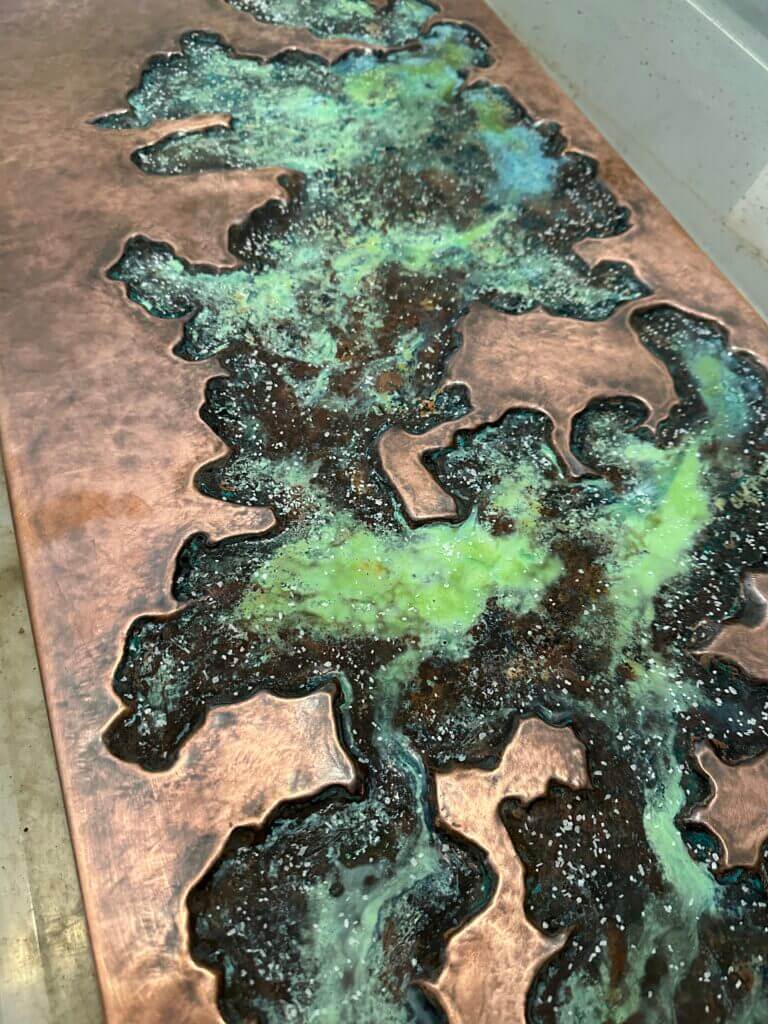
Patina and Finishing
PROCESS PHOTOS
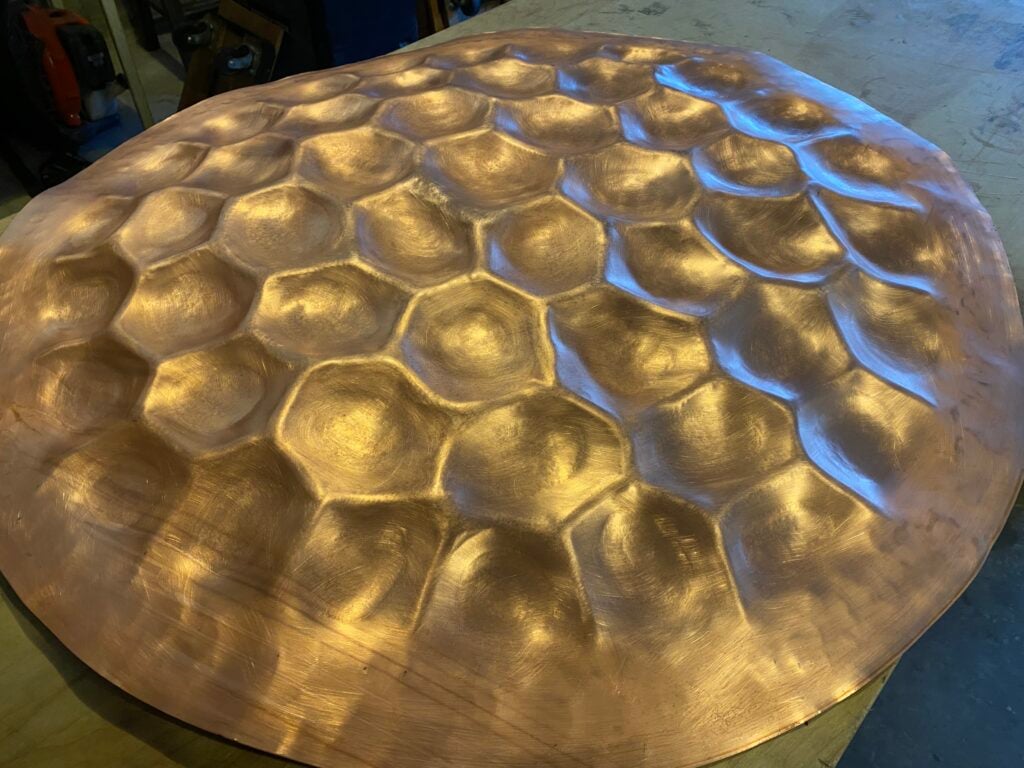
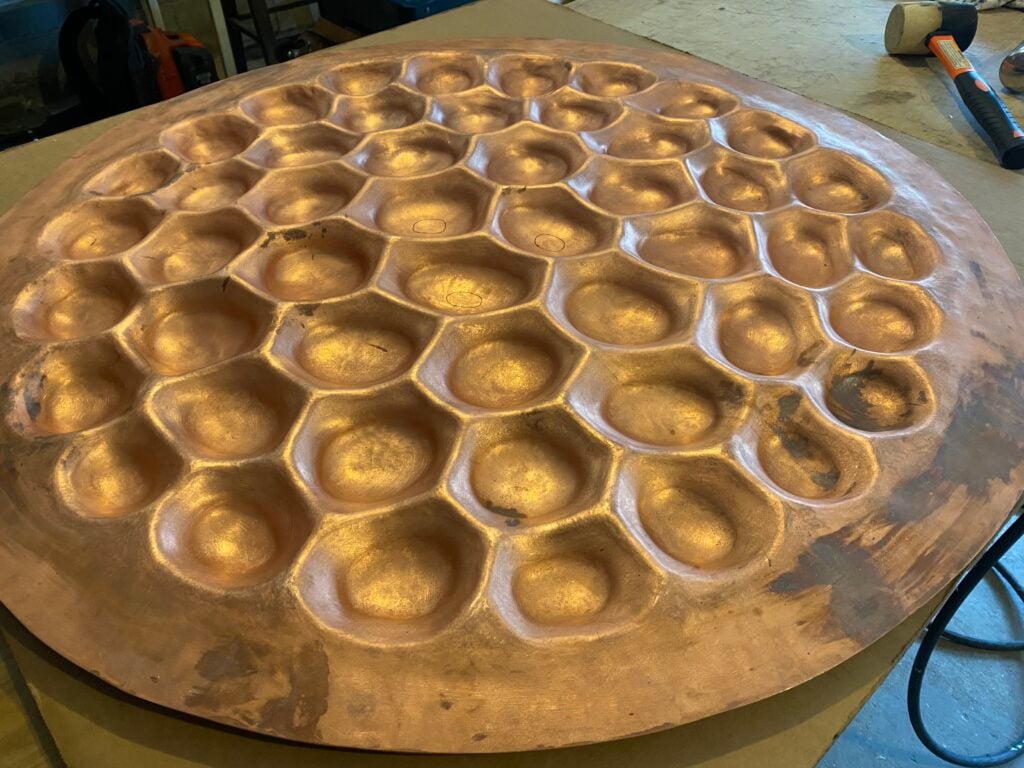
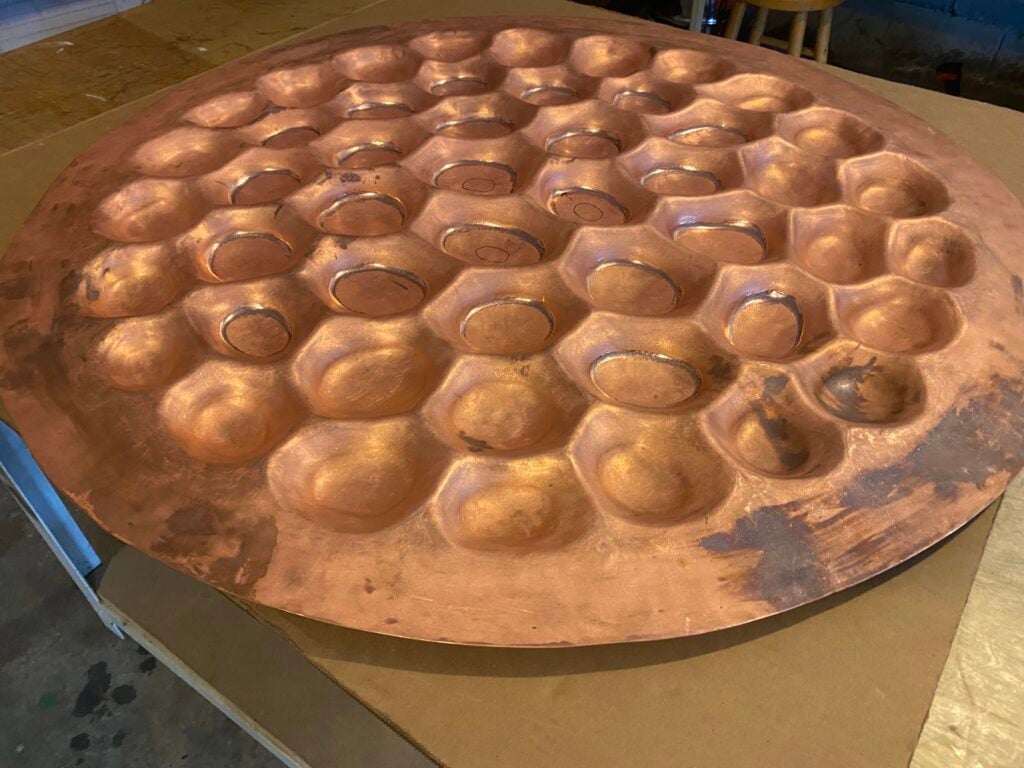
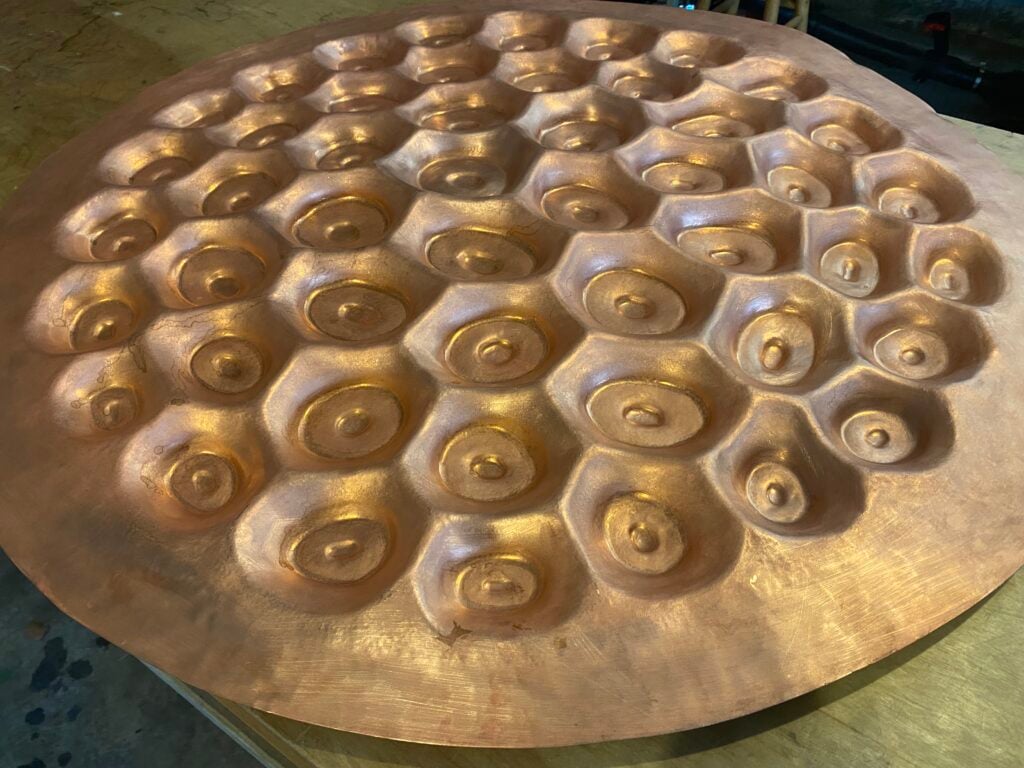
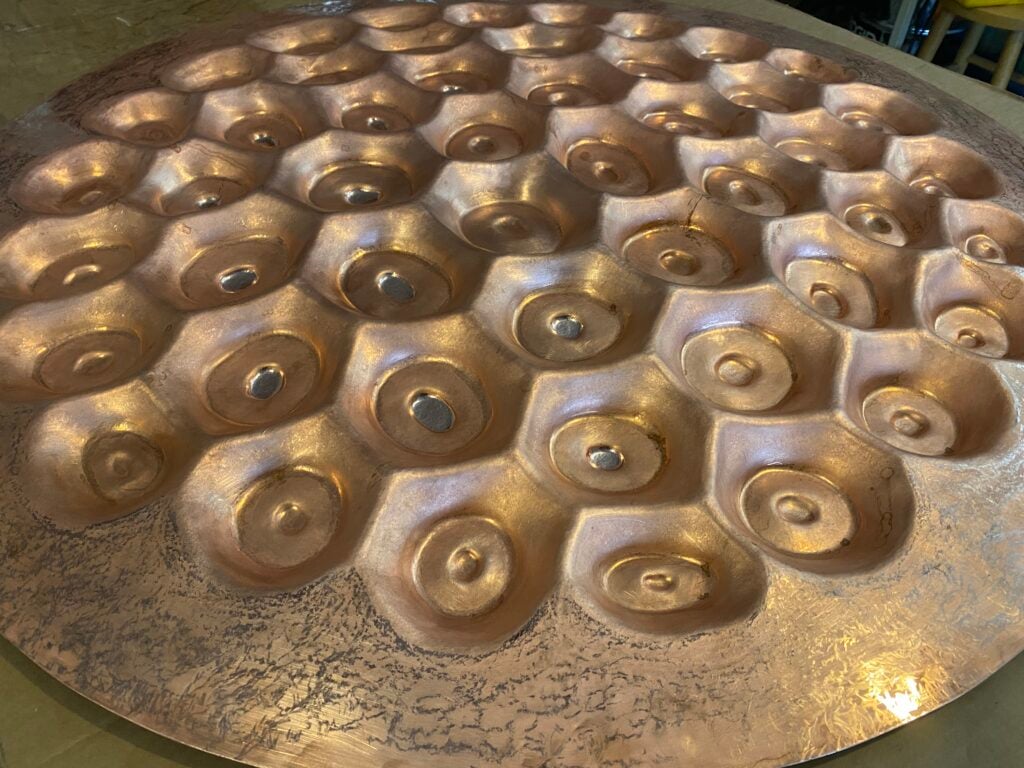
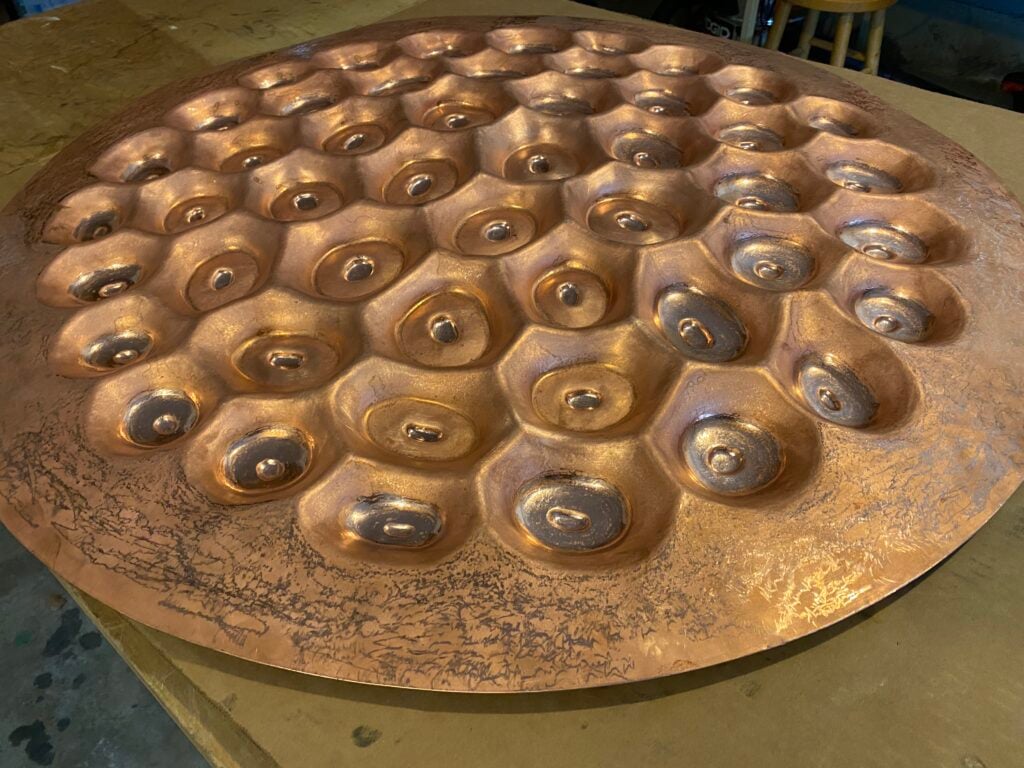
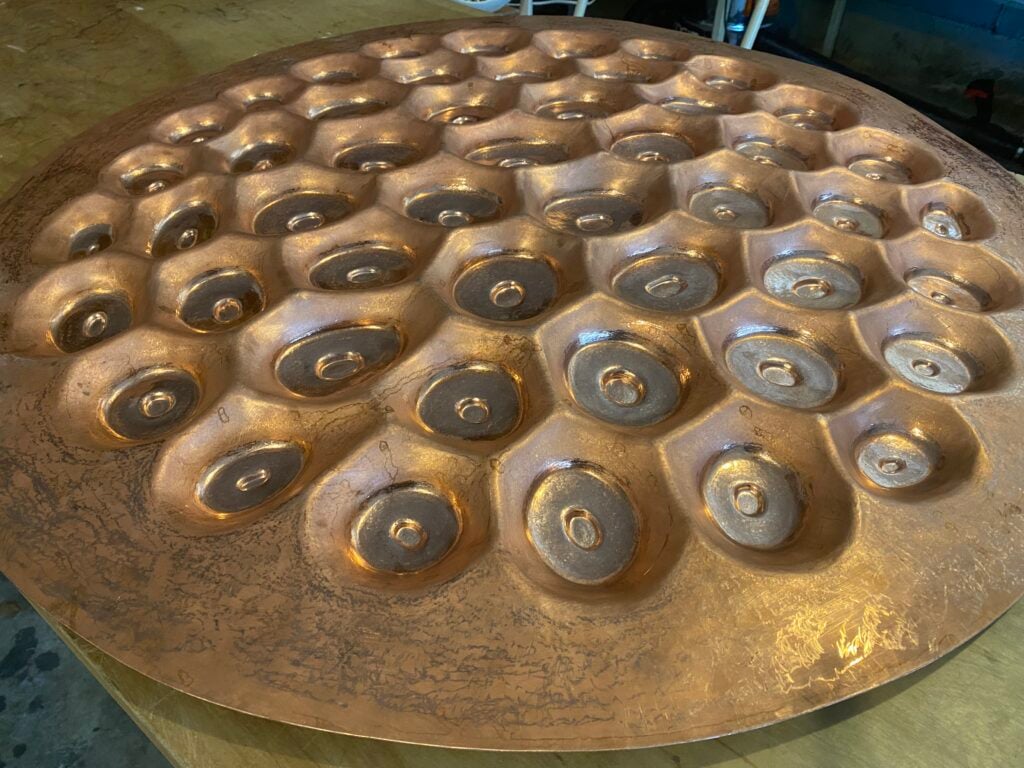
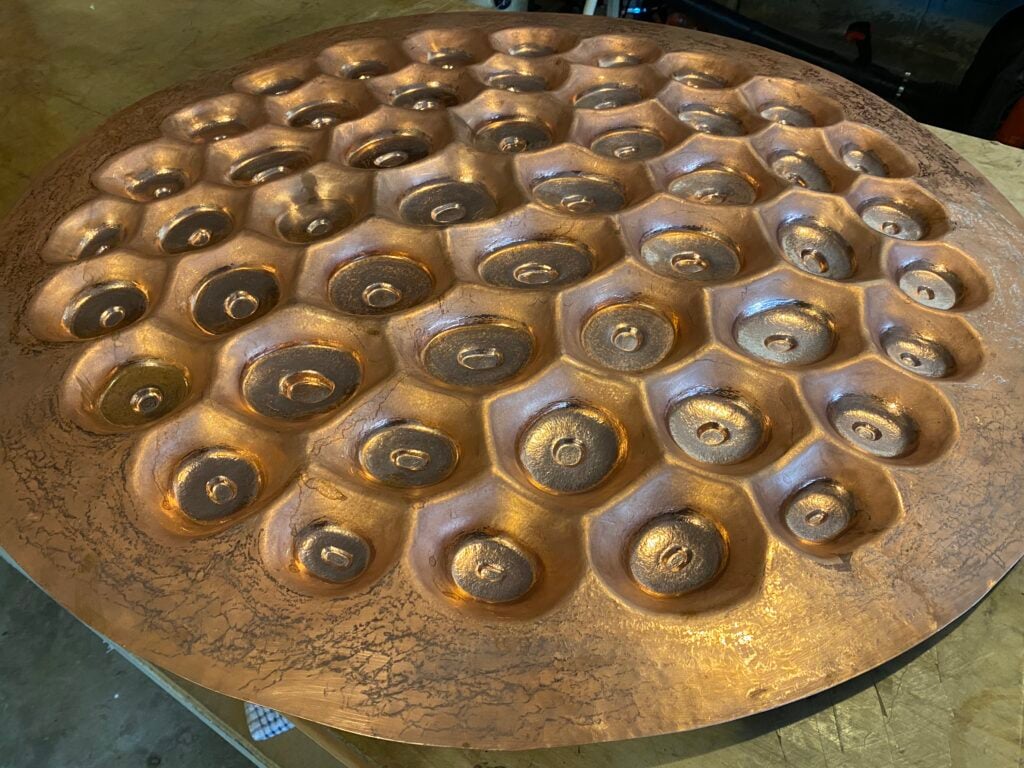
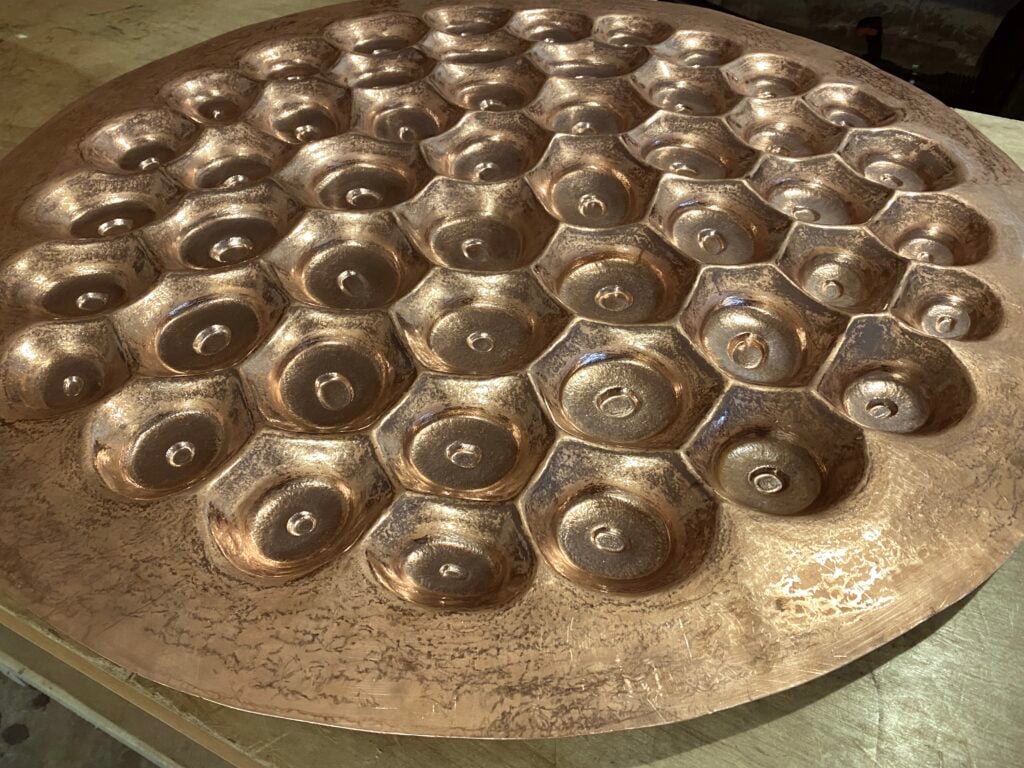
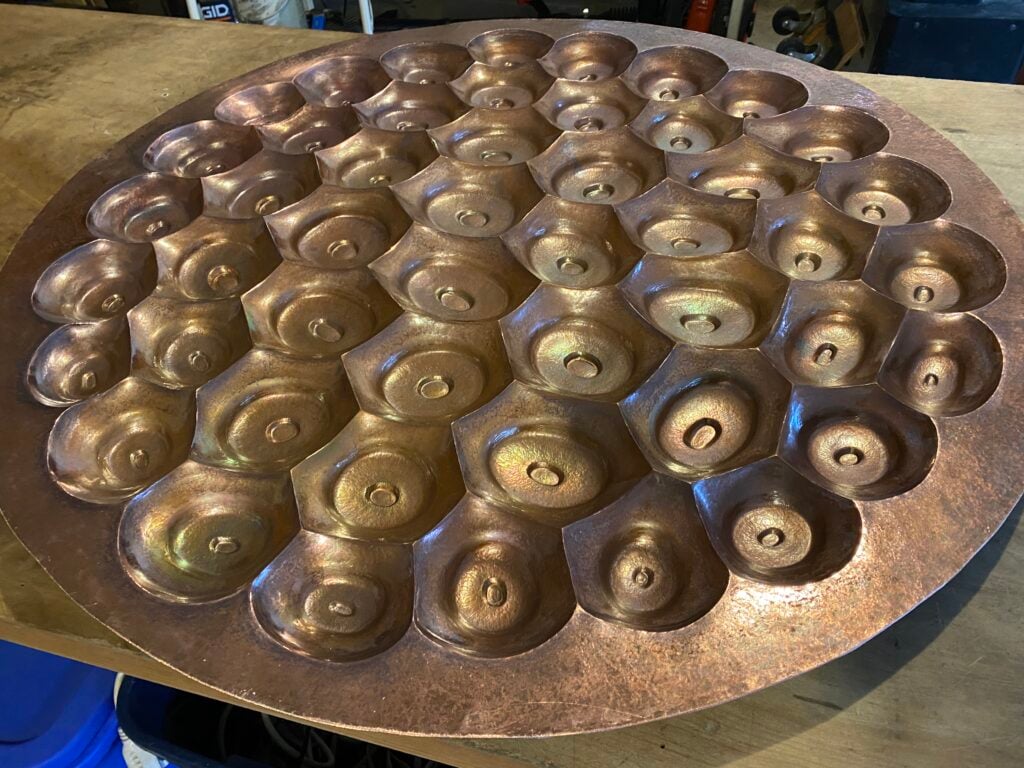
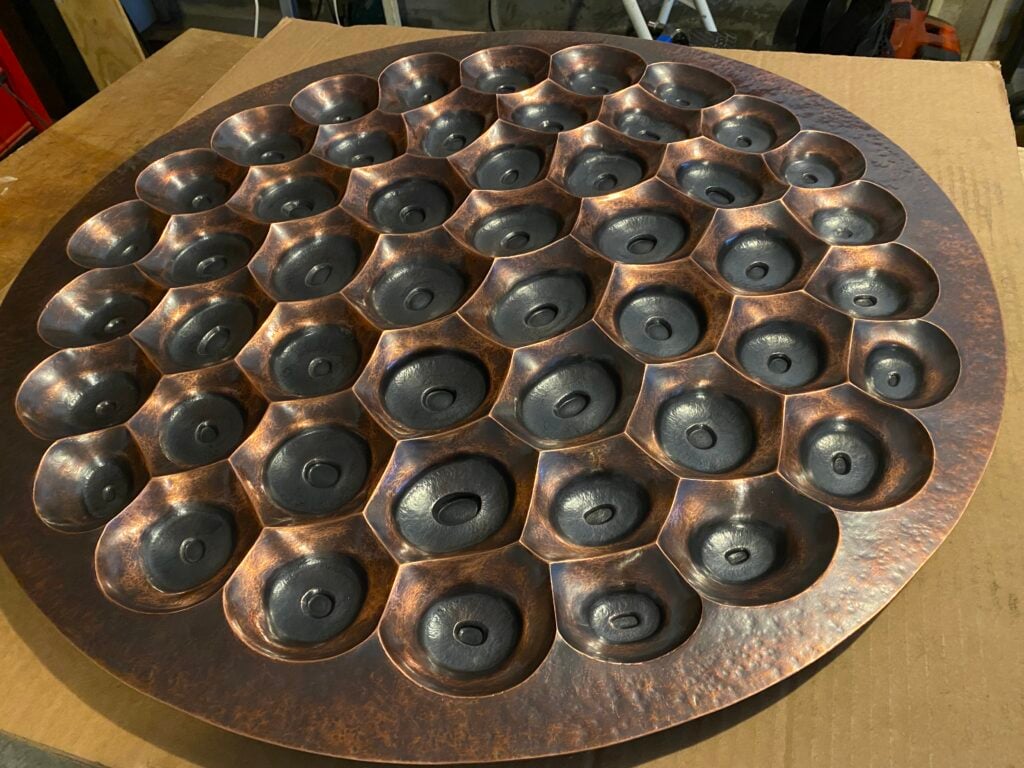
Coral Inspired Wall Hanging
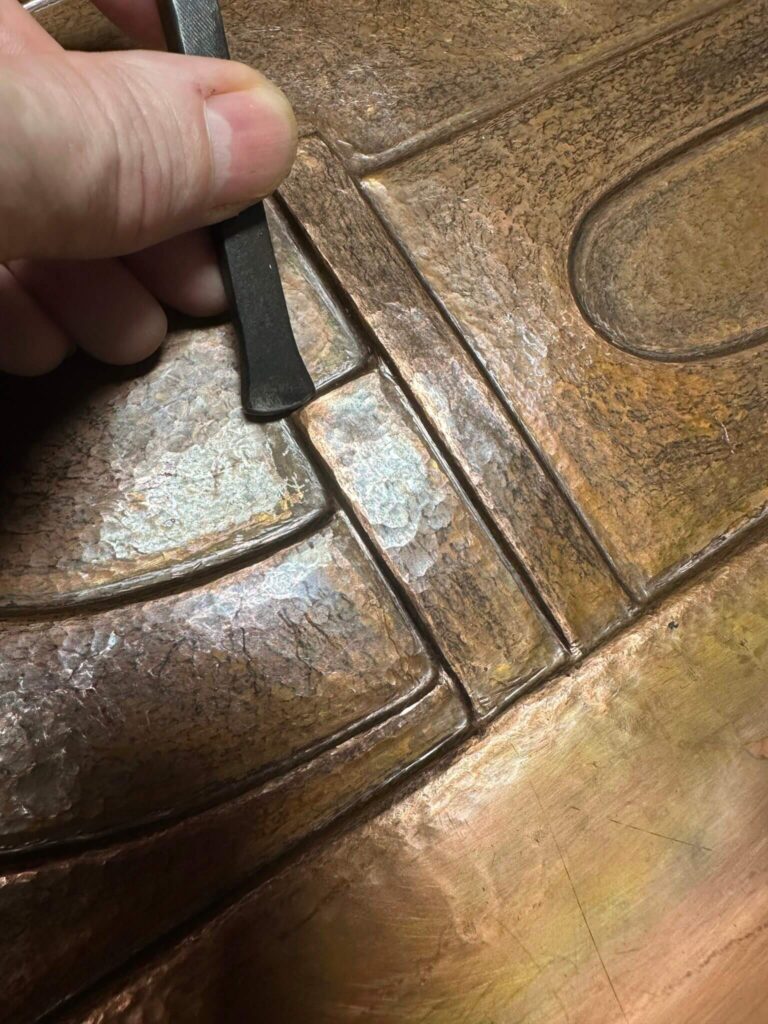
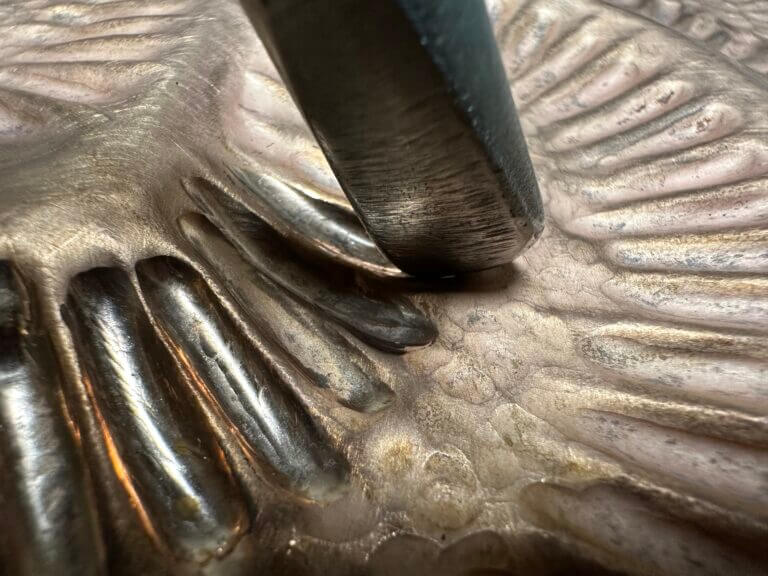
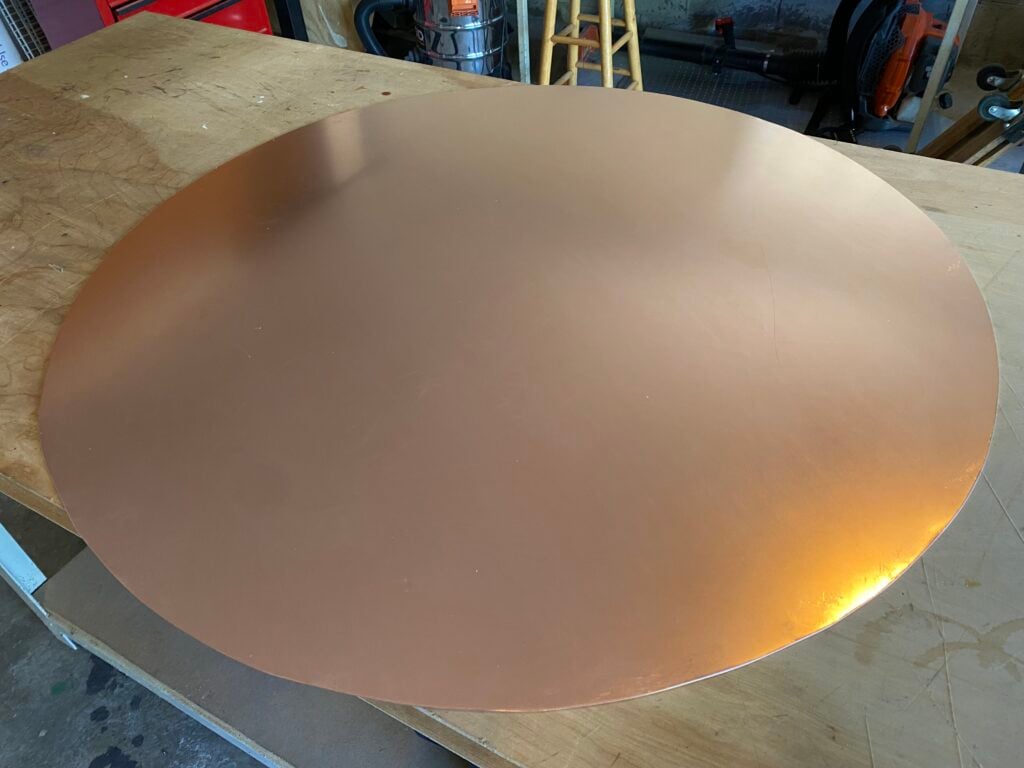
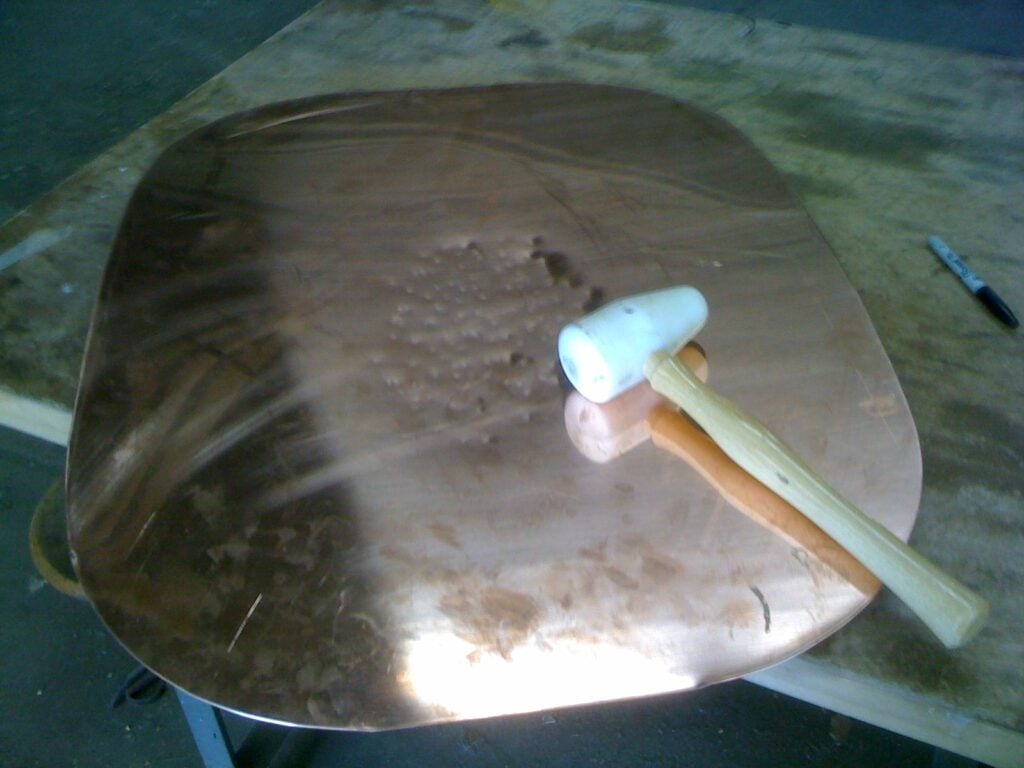
This wall sculpture was formed from a single sheet of 16-gauge copper using only hammers and a torch. The work required numerous cycles of annealing (heating the metal to soften it) followed by shaping through repoussé and chasing. Initial forming began with shallow craters hammered down from the front side, followed by pushing the surrounding areas outward from the back to create raised ridges. A pneumatic hammer helped refine the forms with greater speed and control. As the relief developed, sharper ridges were formed through a technique called acumination, where raised areas are creased inward. A final round of hammering defined an inner ring within each crater. The surface was cleaned with a diluted acid solution to remove oxides, then finished with a deep brown patina. The completed piece measures 33 inches in diameter.
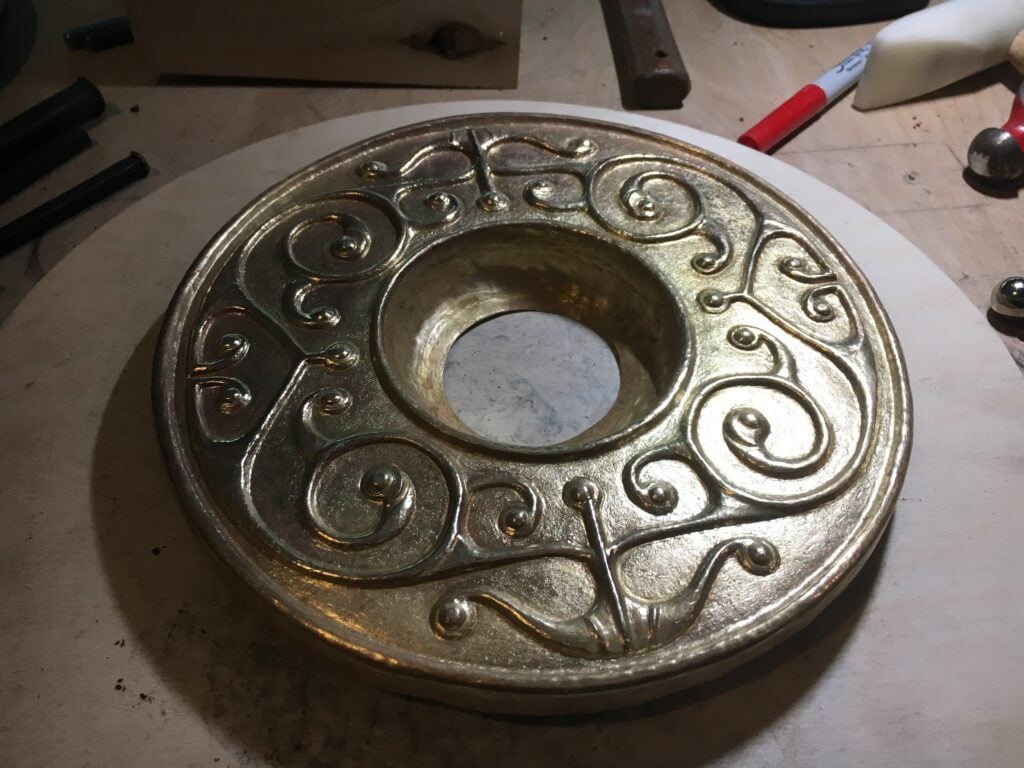


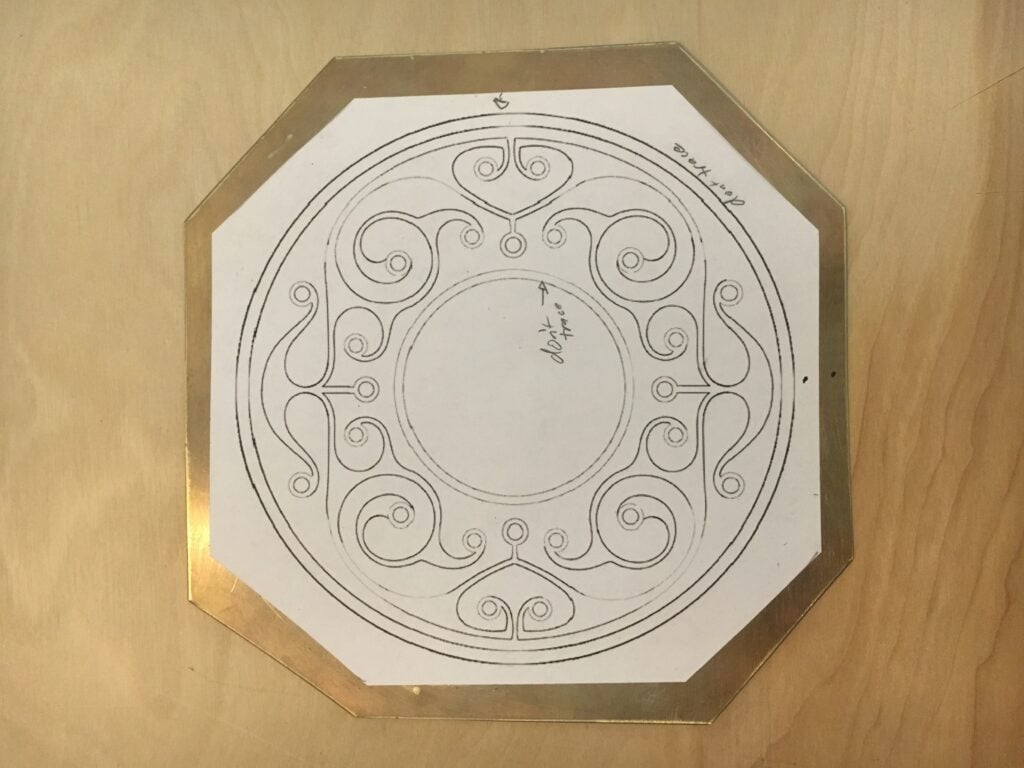
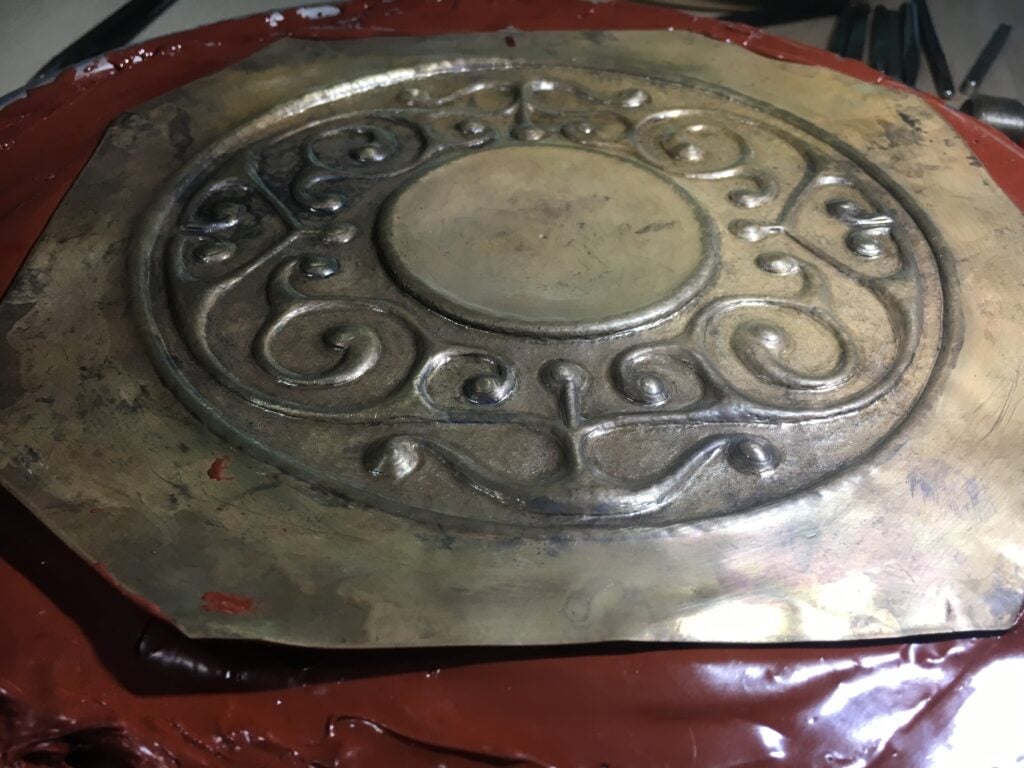
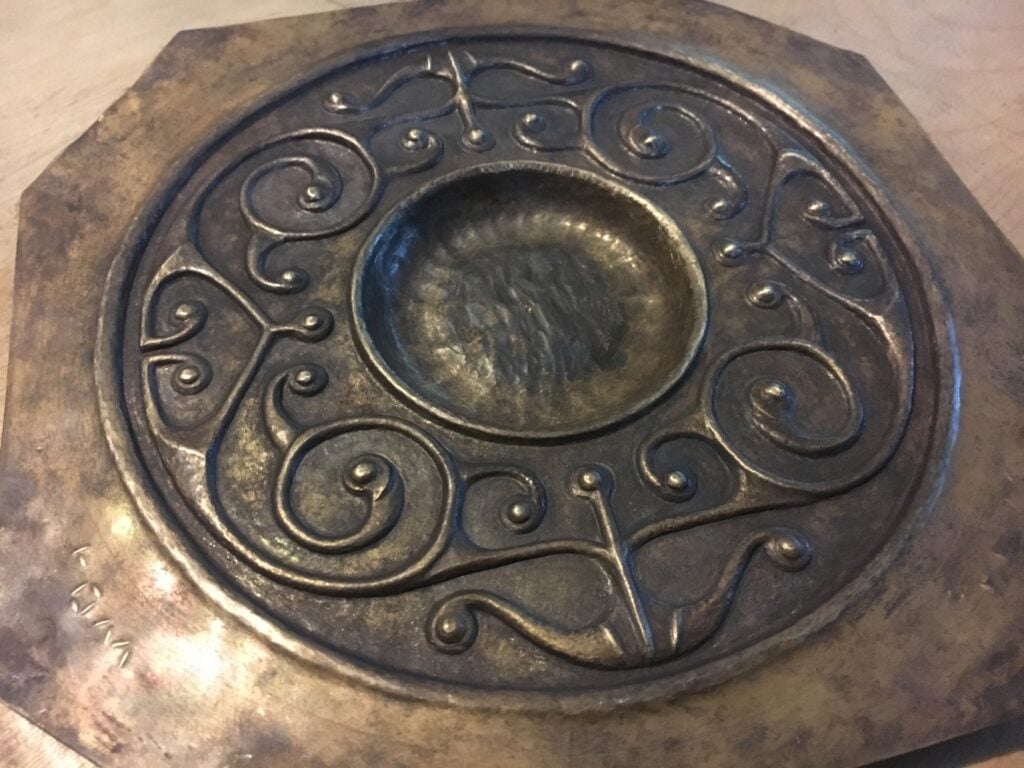
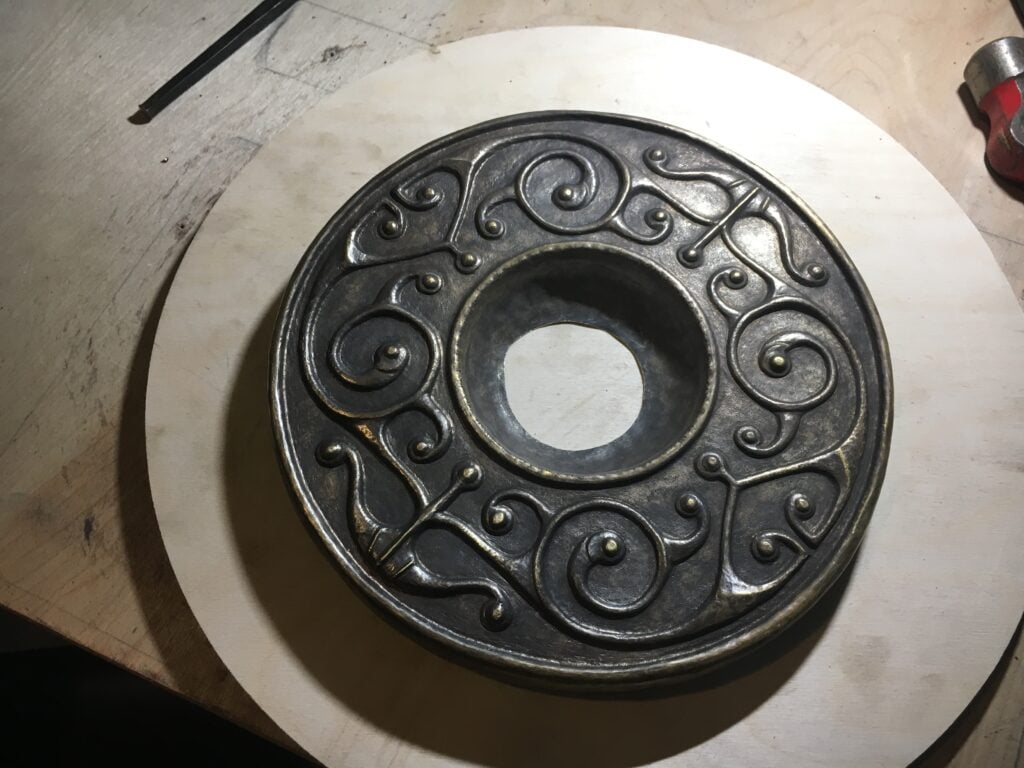
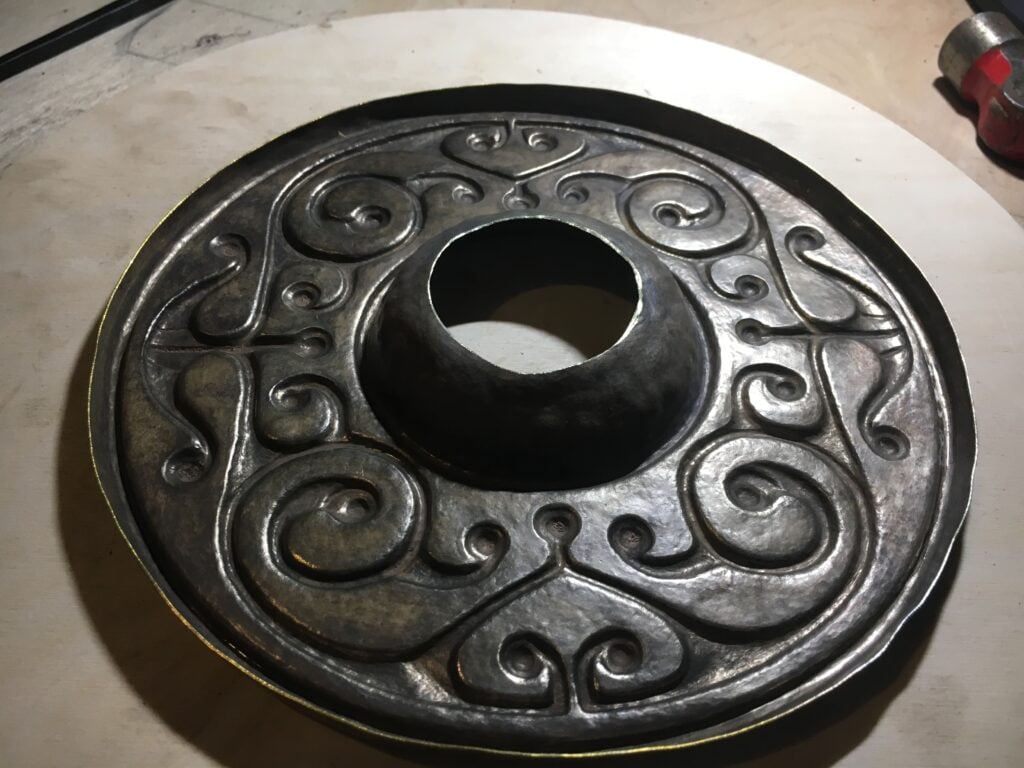
Reproduction for Ancient Celtic Trumpet
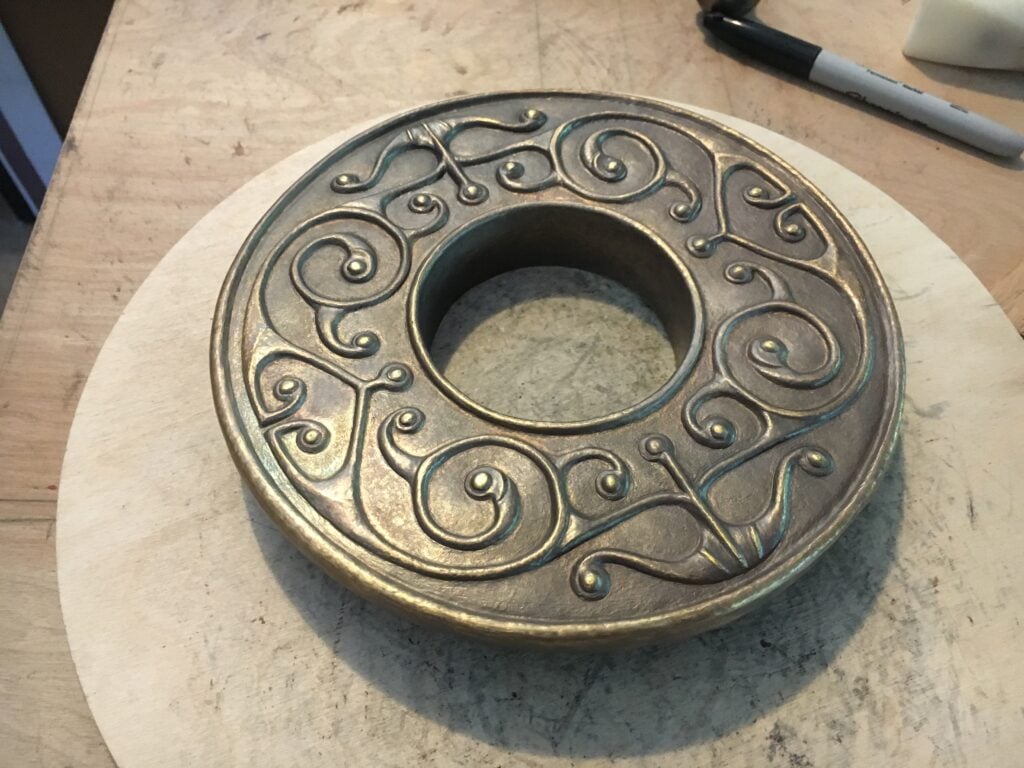
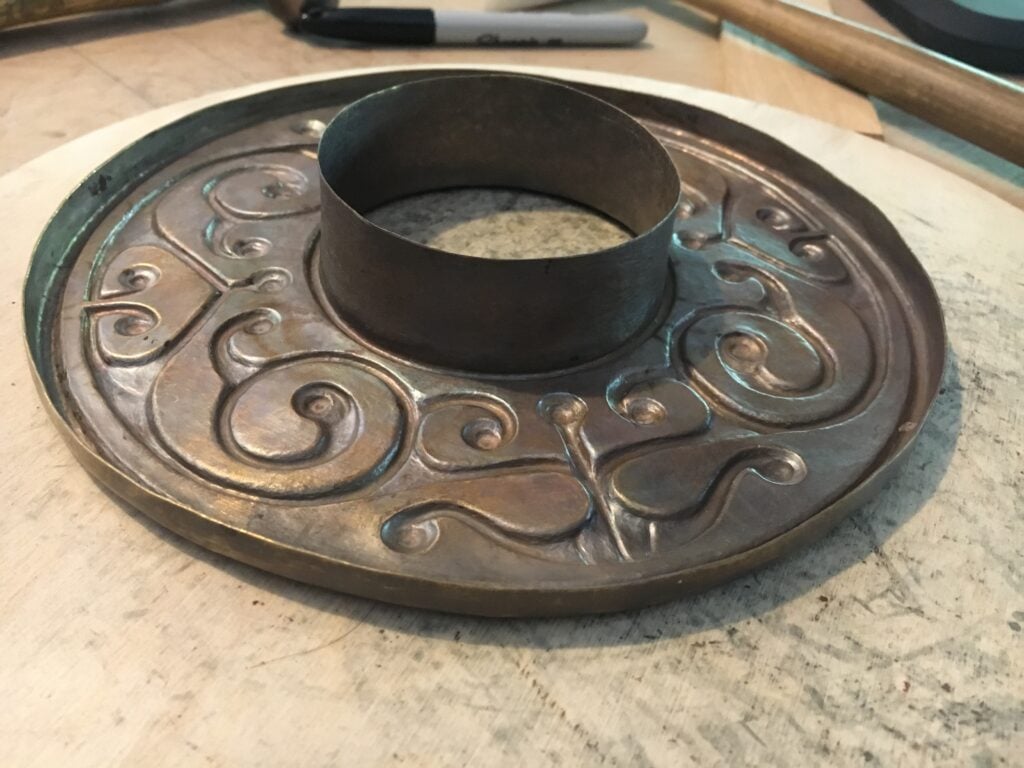
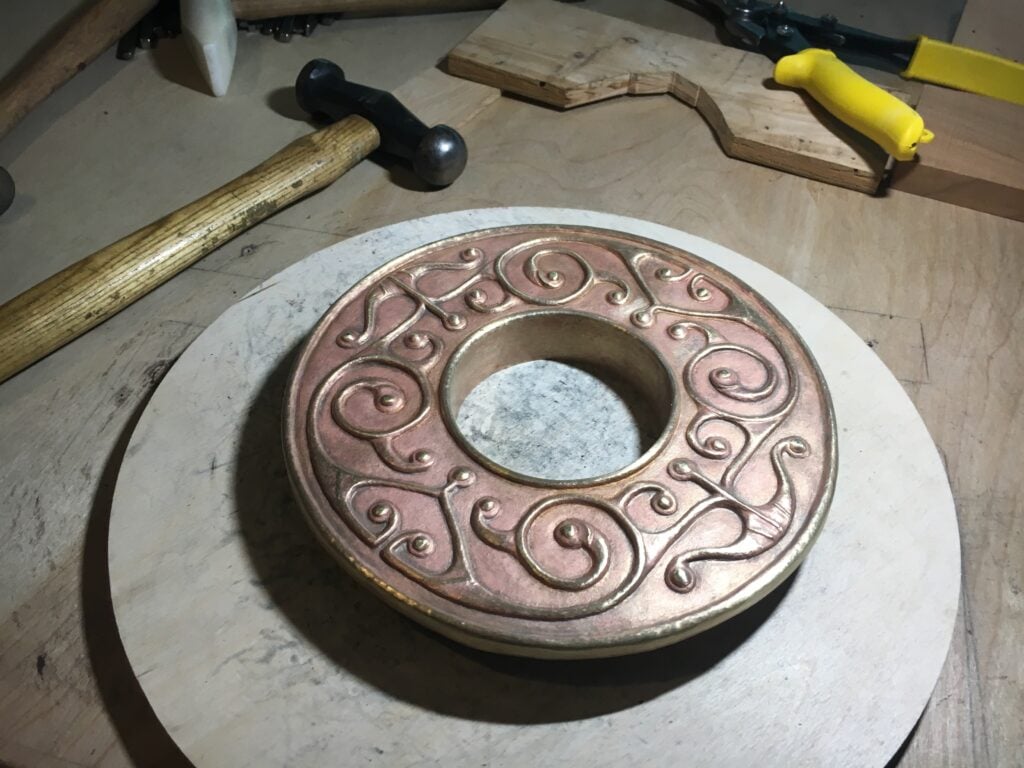
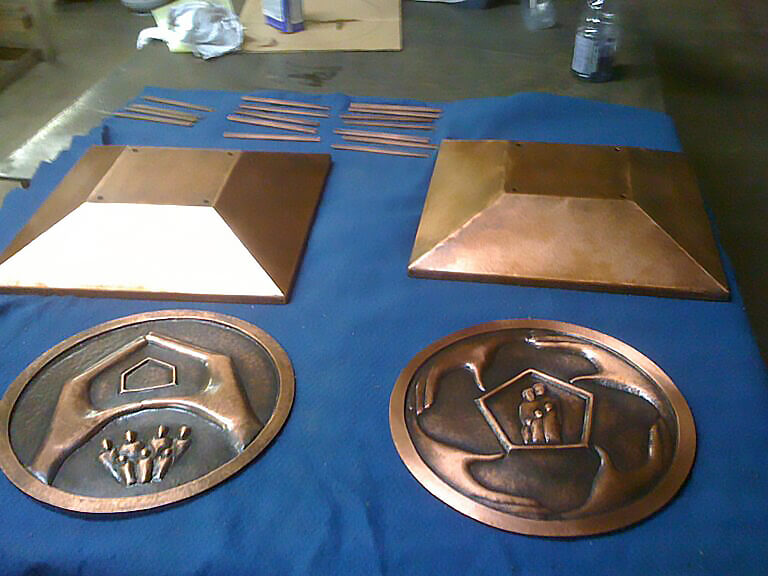
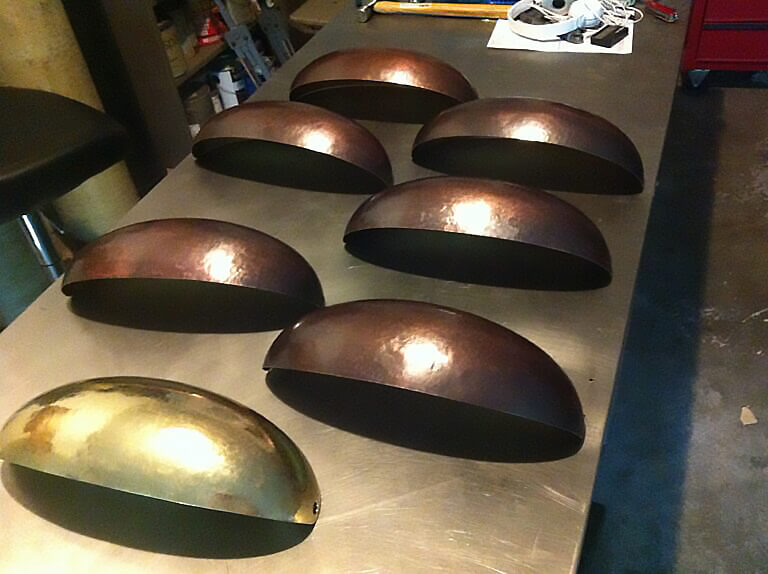
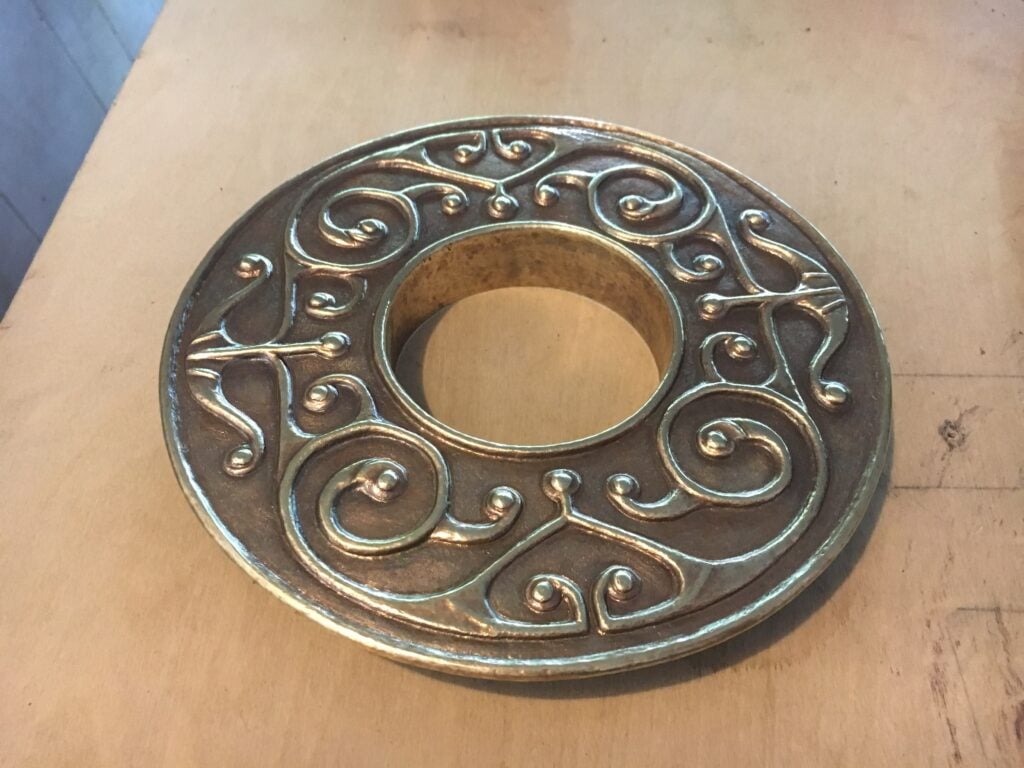
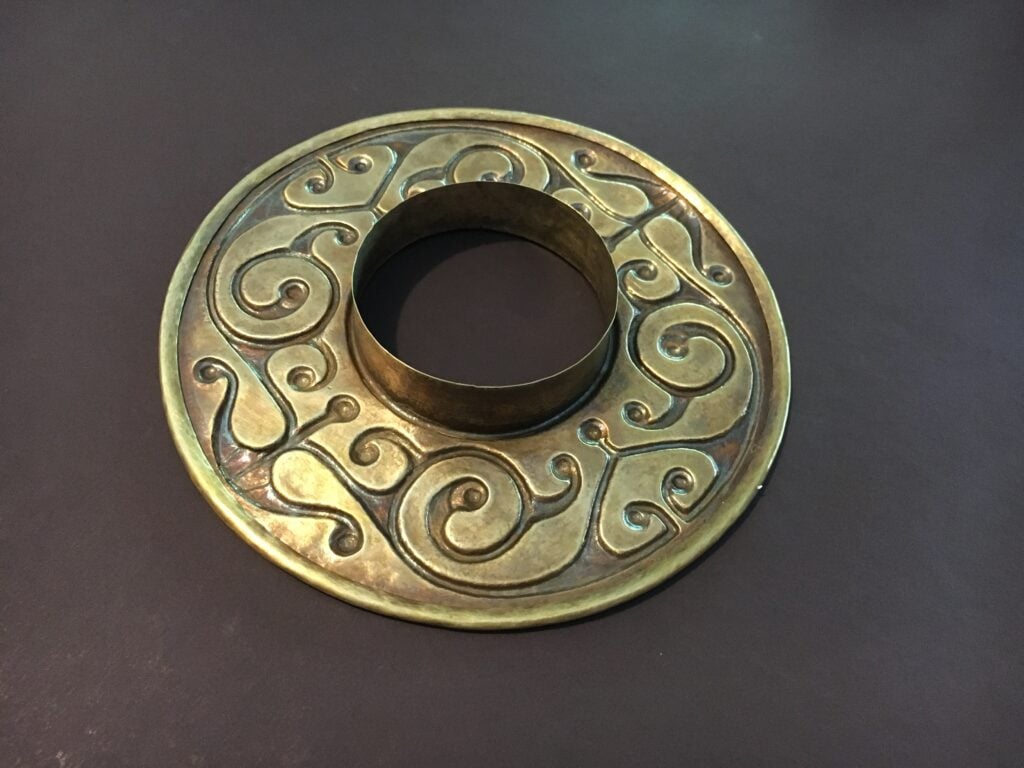
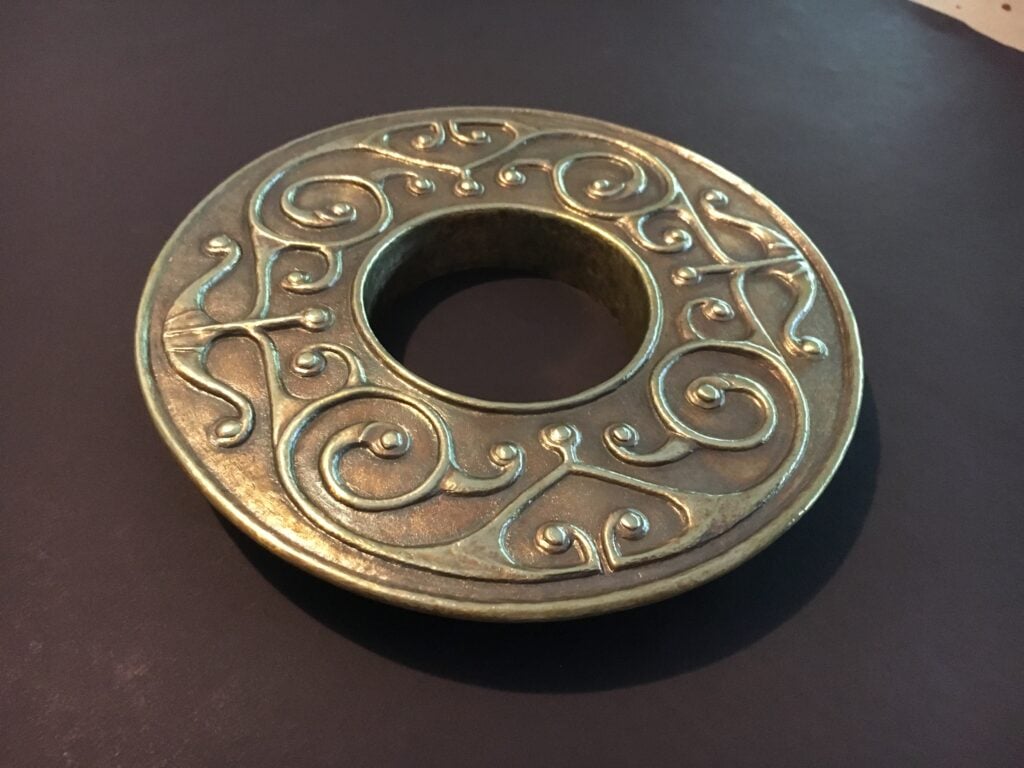
This piece is a reproduction bell plate for a replica of the Loughnashade Trumpet, an ancient Celtic bronze horn from the Iron Age. The trumpet features an ornate, raised design typical of La Tène-era metalwork. The relief on this reproduction was based on reference photos of surviving examples. The design was pushed into sheet brass using chasing tools, a process that involves forming the metal from both the front and back. The work was done over pitch, a pine based resin used to support the metal while it is shaped. A hole was then cut in the center and gradually widened by stretching the metal outward until the sides formed a straight cylindrical wall. The shape of this opening was tightly controlled to ensure a precise fit into the existing trumpet body. Once shaping was complete, the outer edge of the brass was trimmed and rolled over to form a thick, rounded hem. The finished plate was treated with patina chemicals to match the aged appearance of the original artifact.


Copper Turtle Sculpture
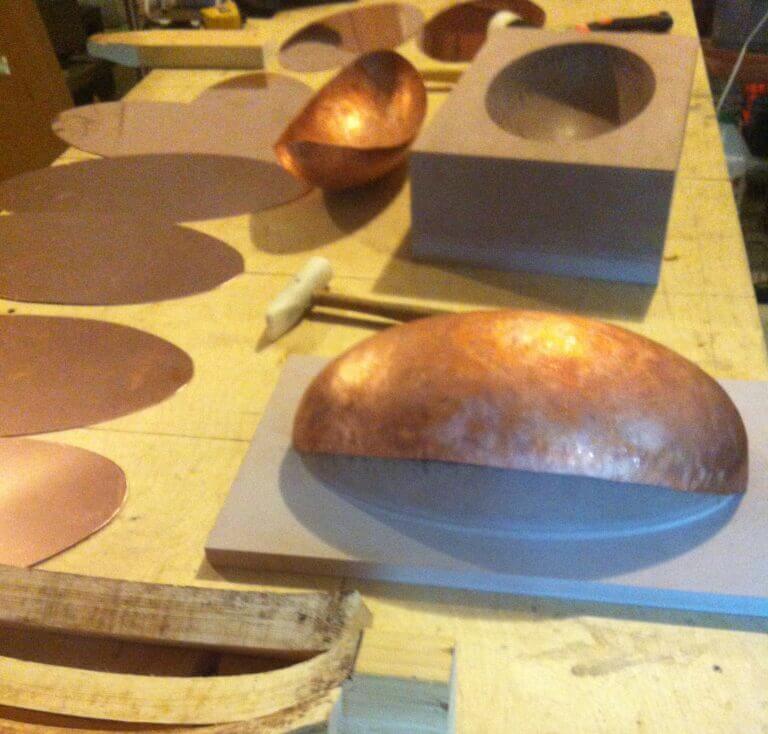
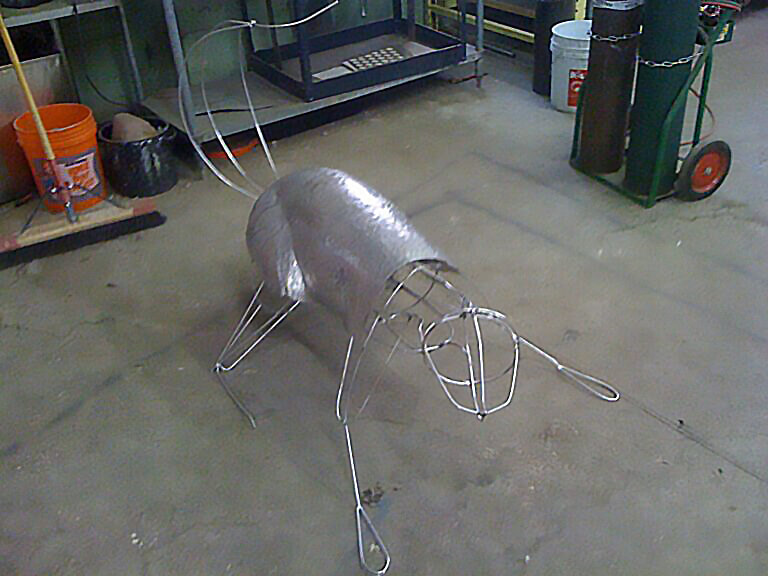
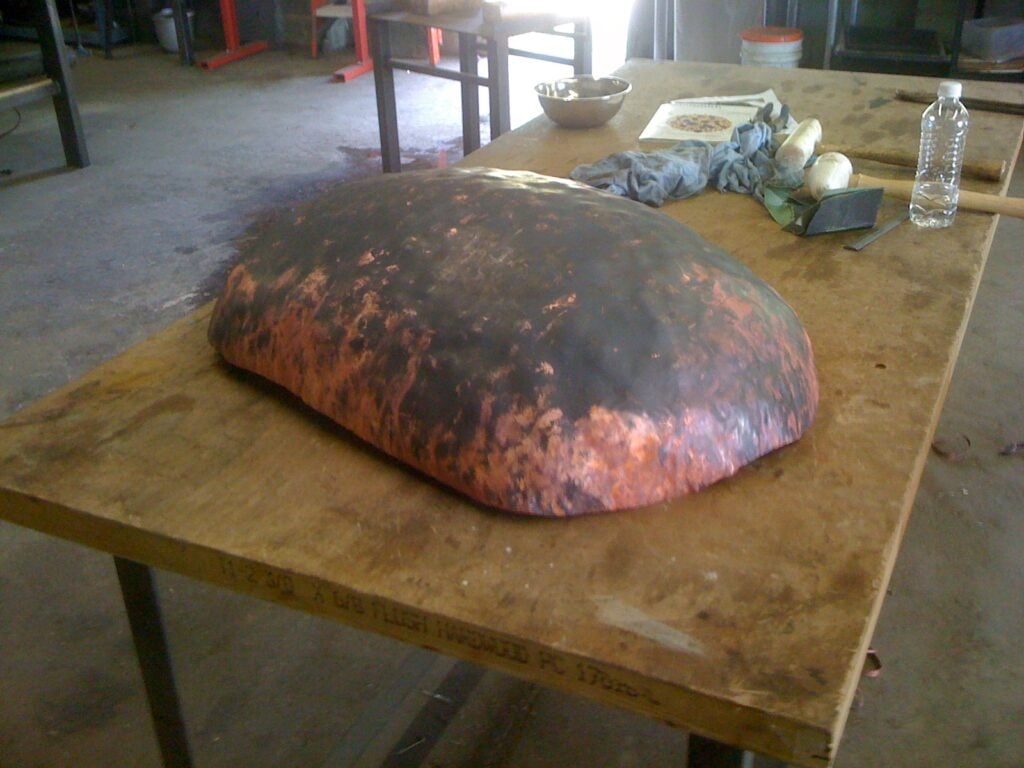
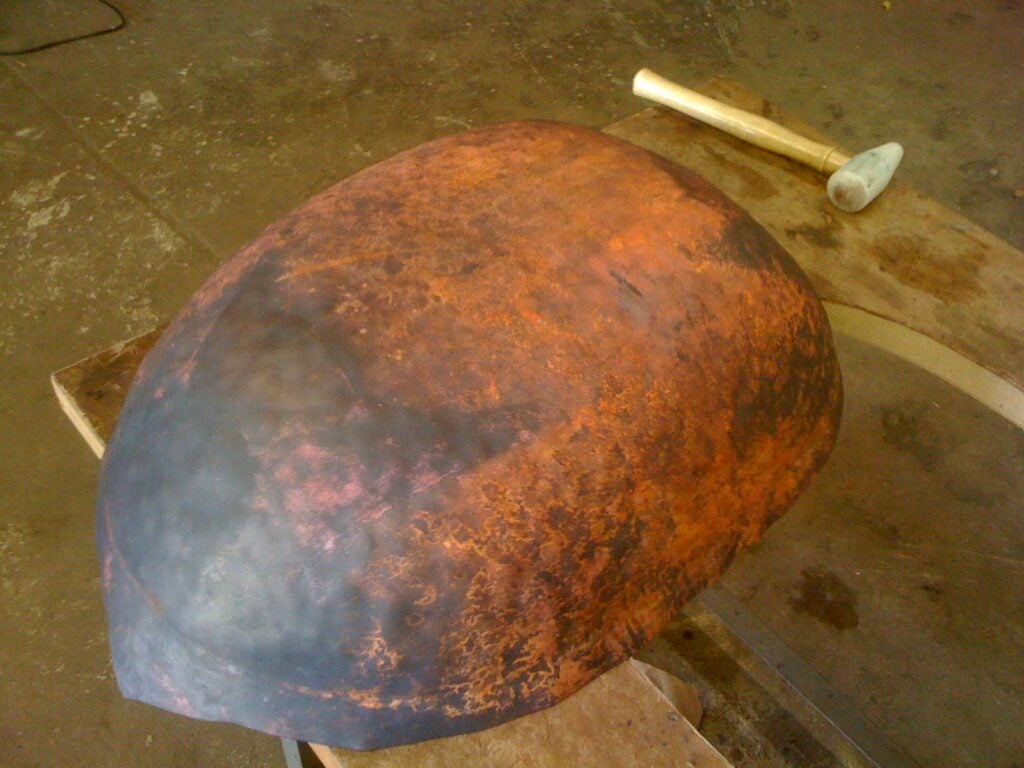
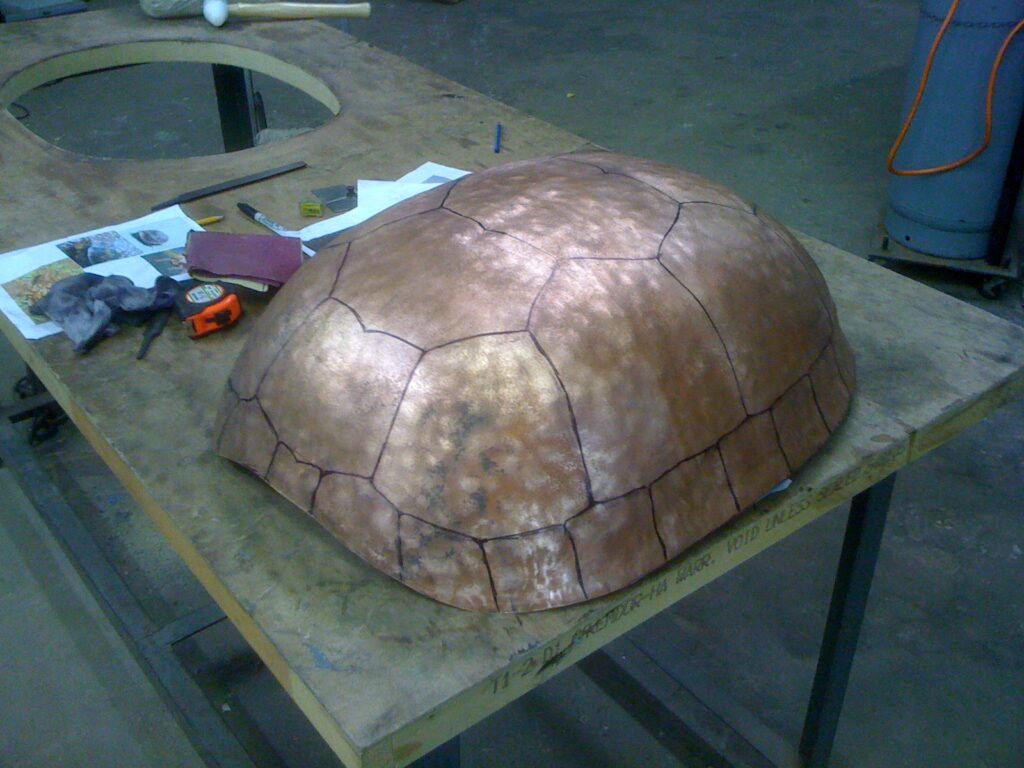
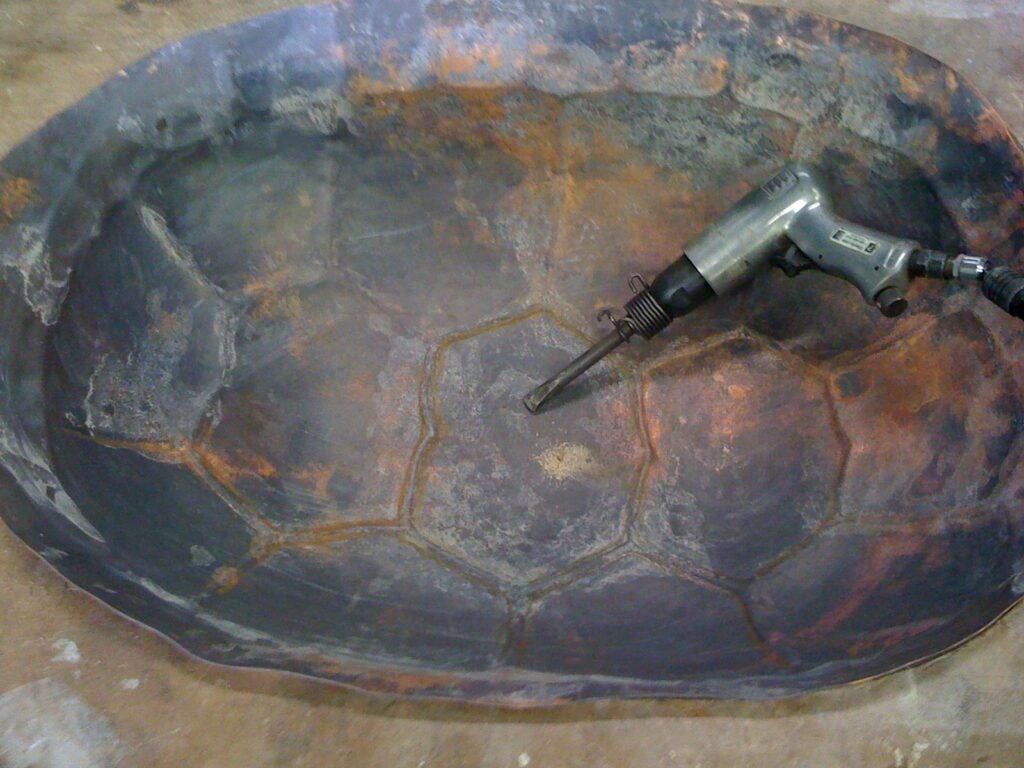
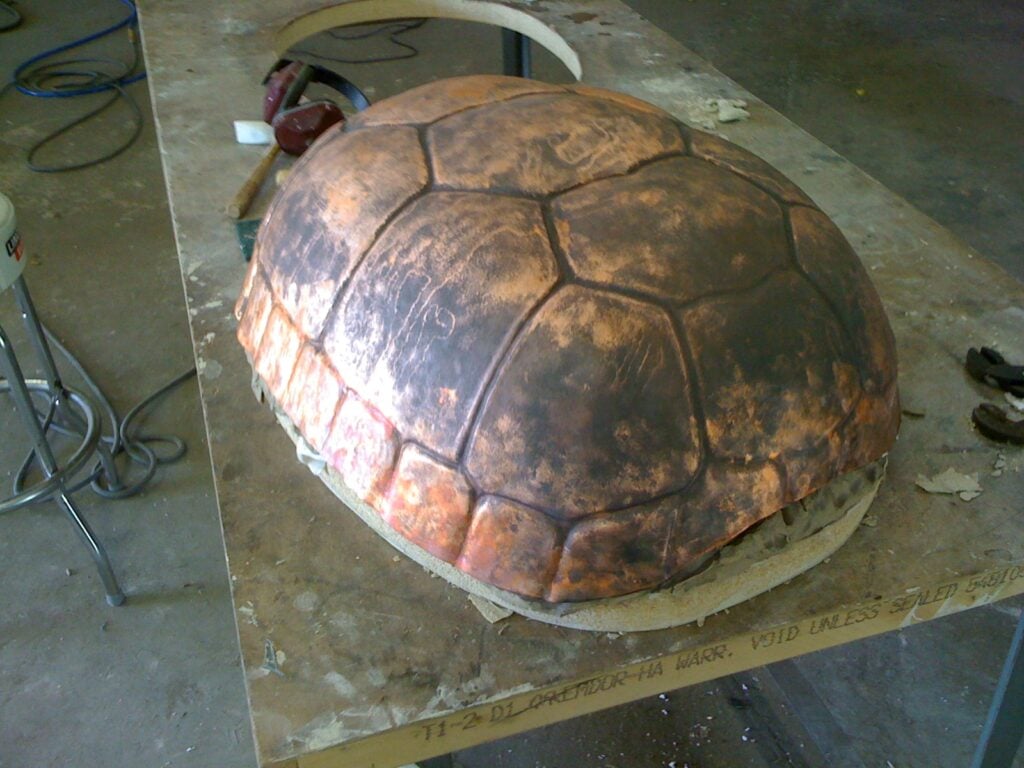
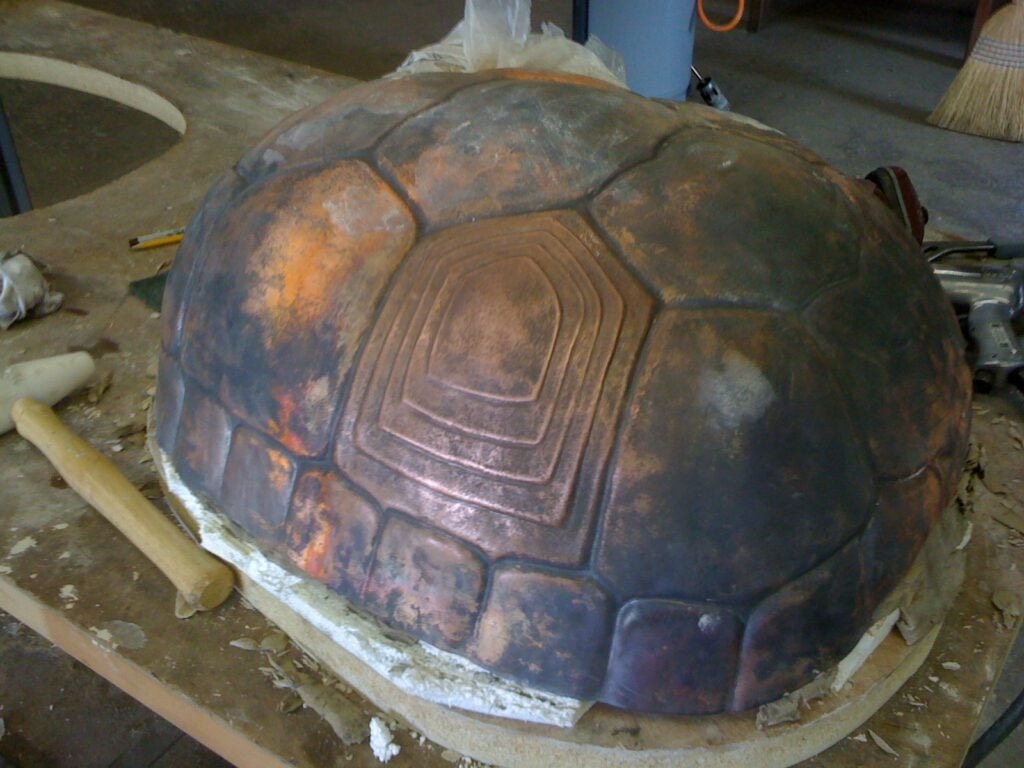
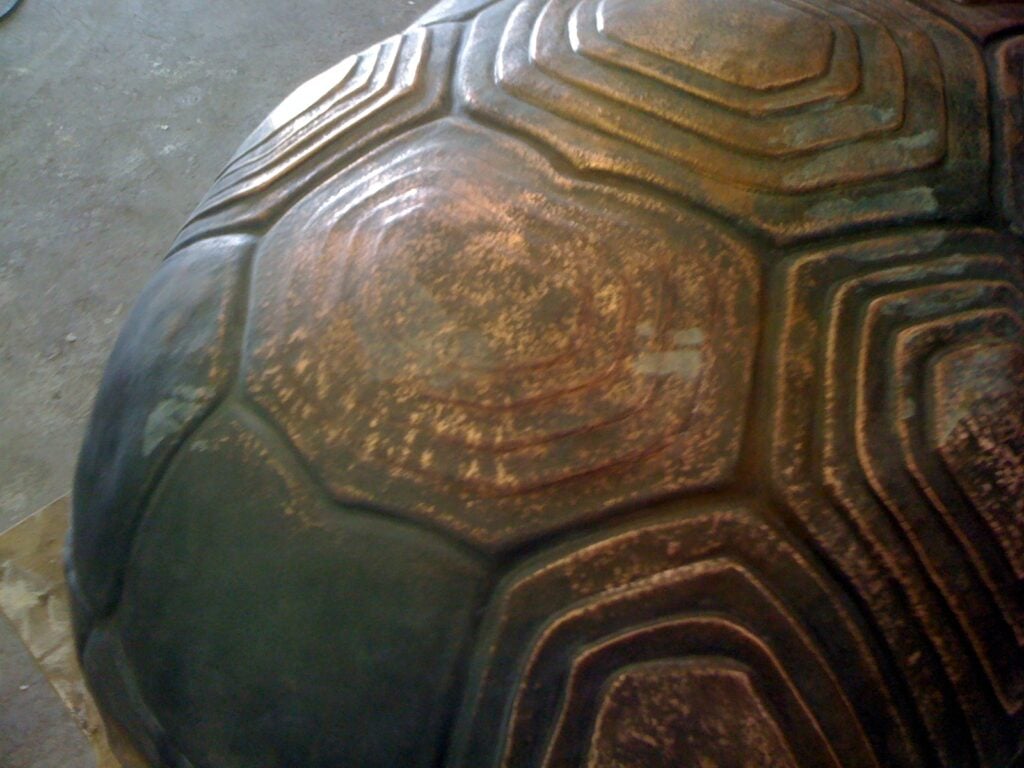
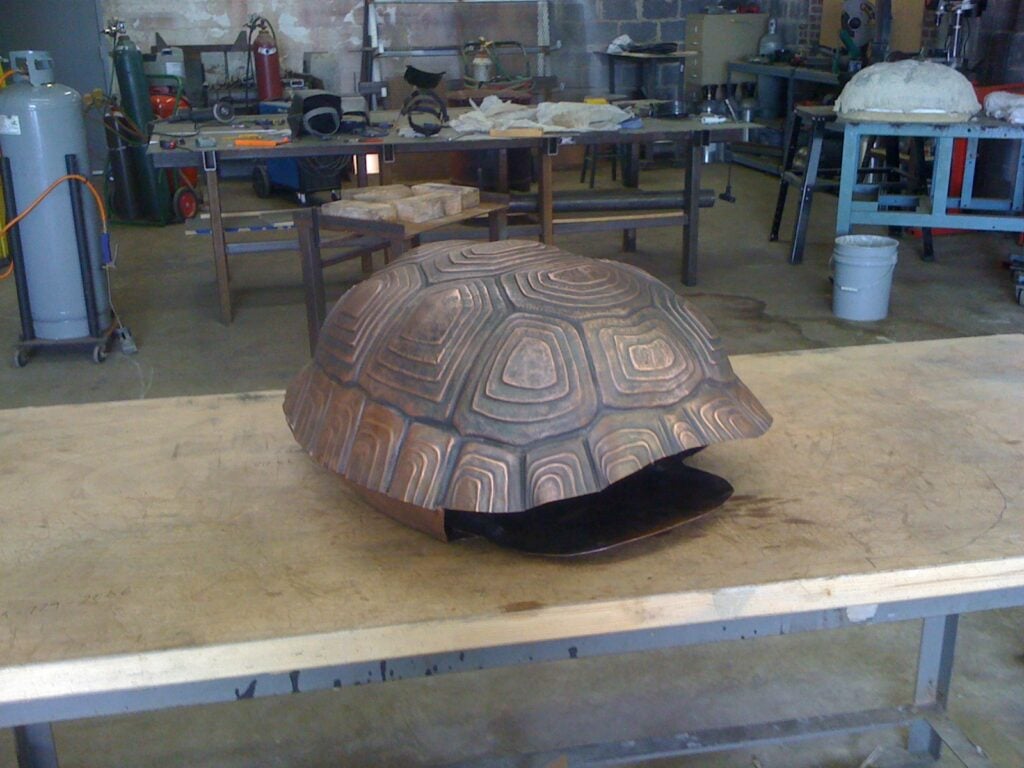
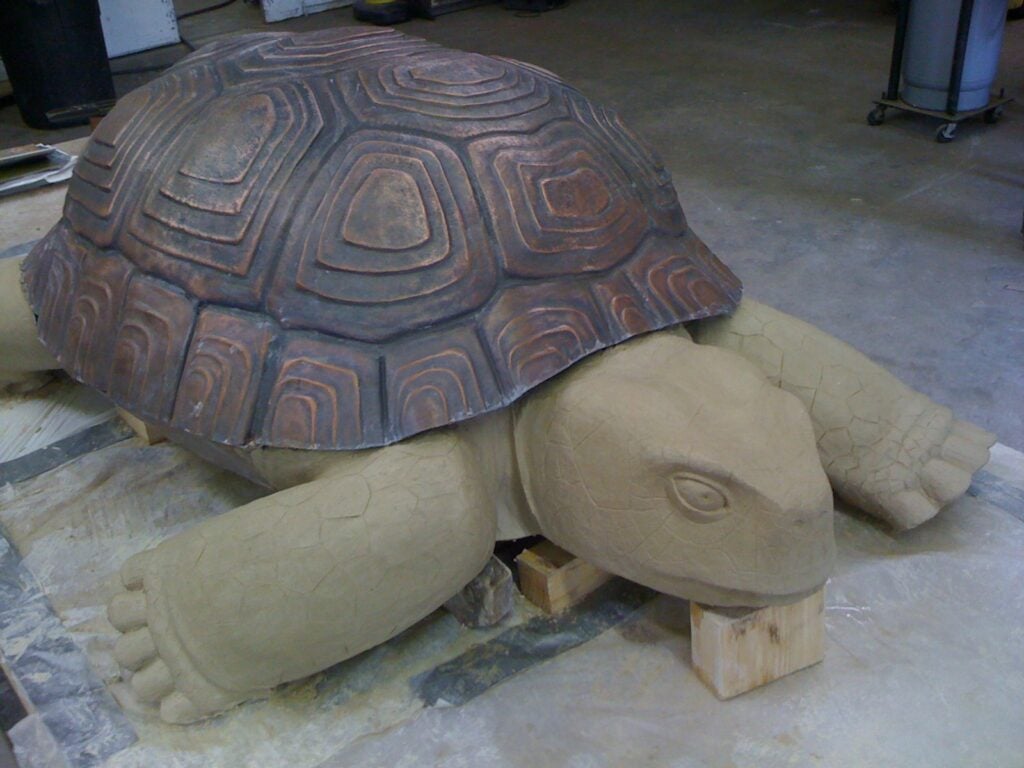
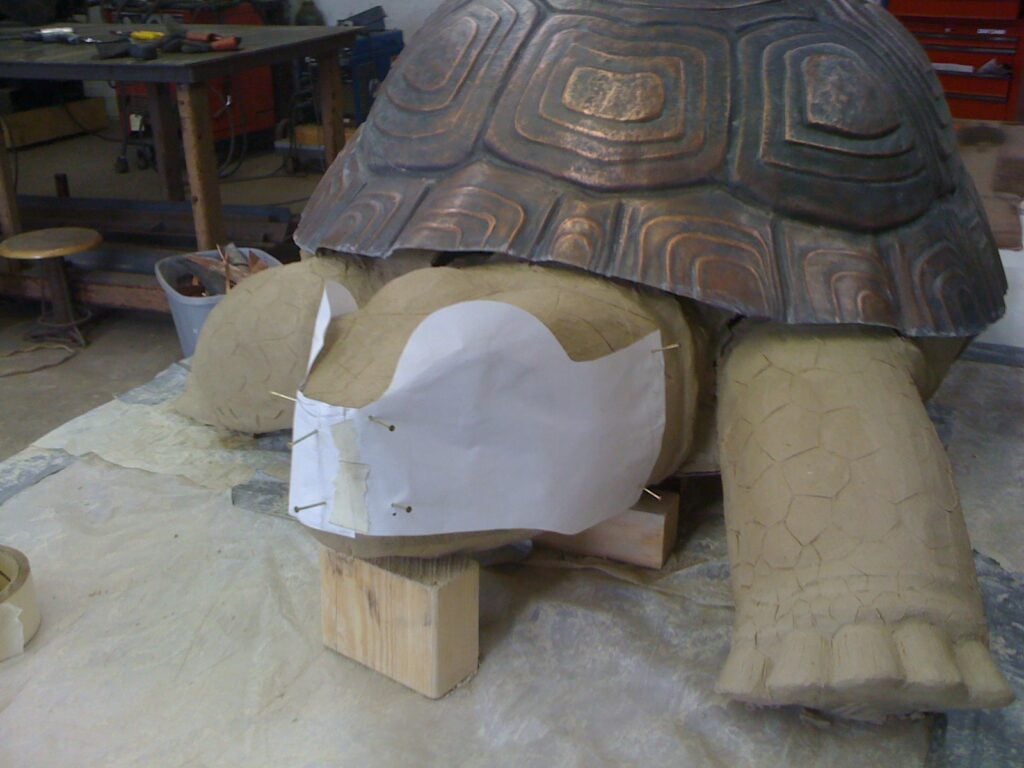
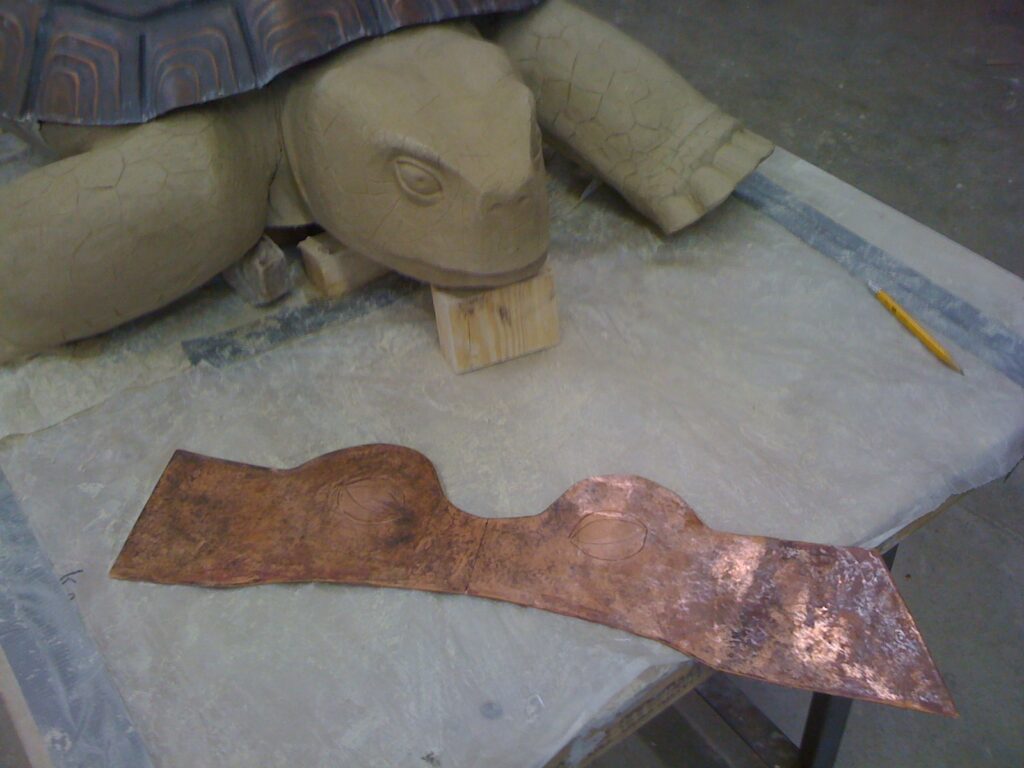
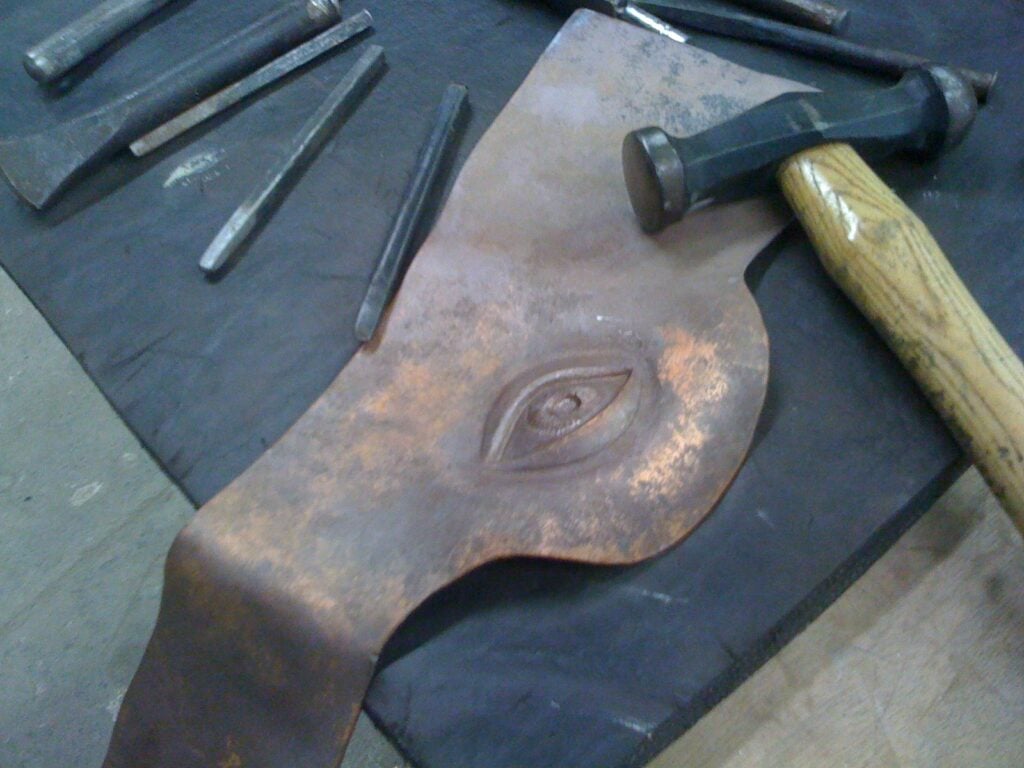
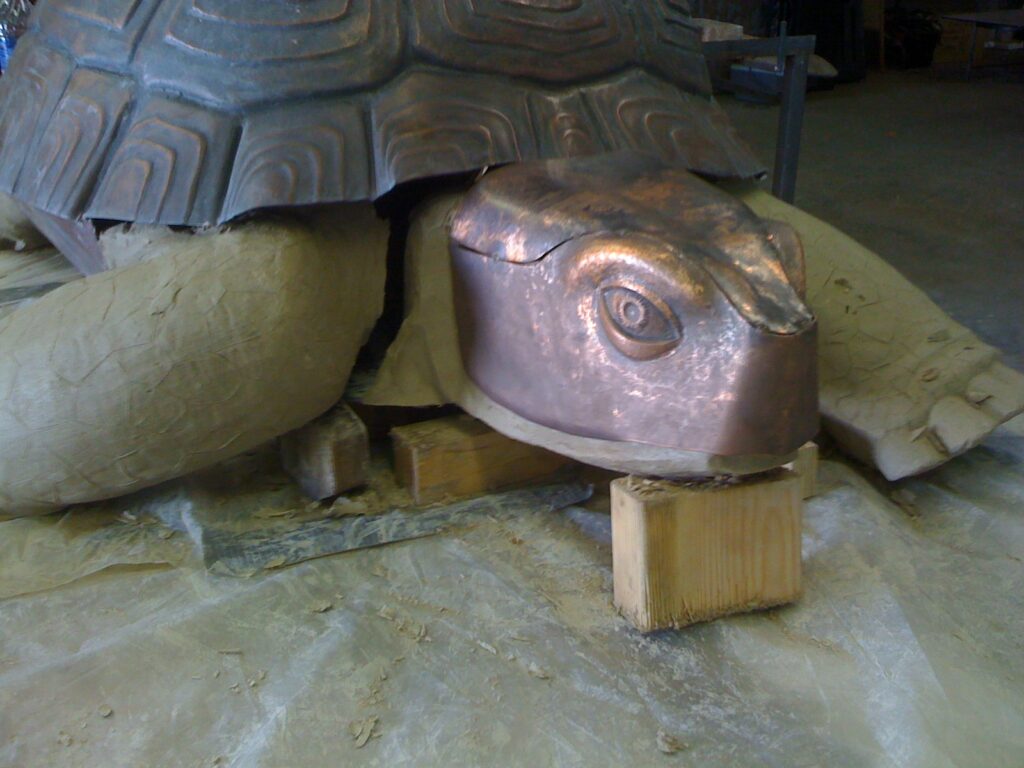
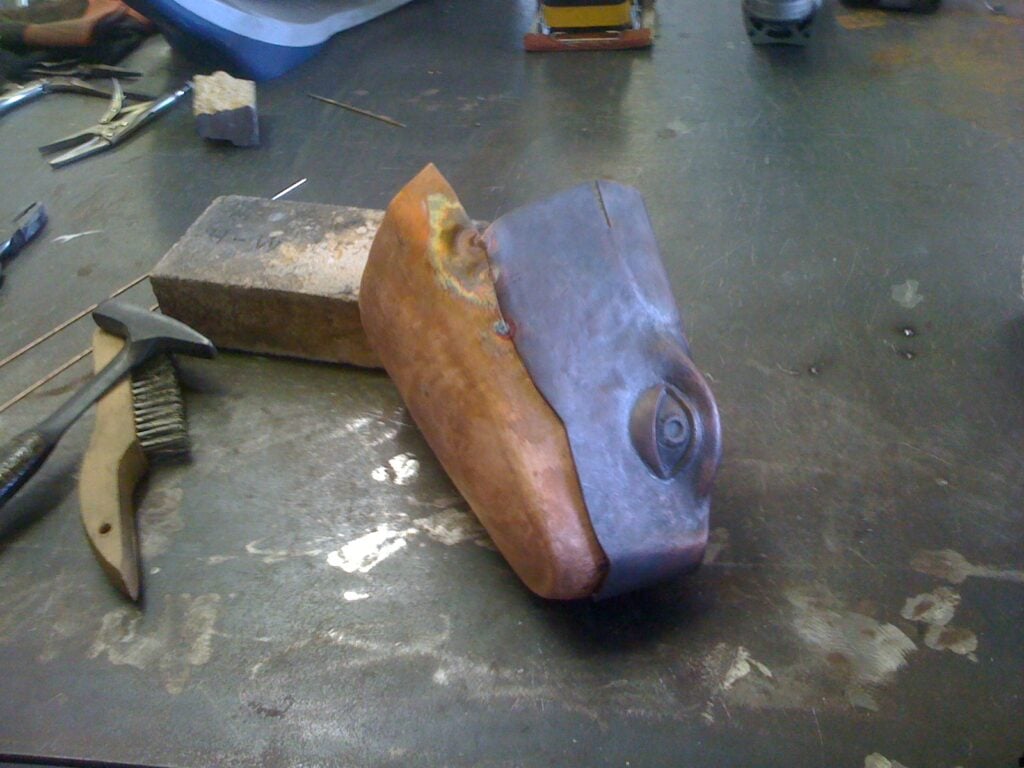
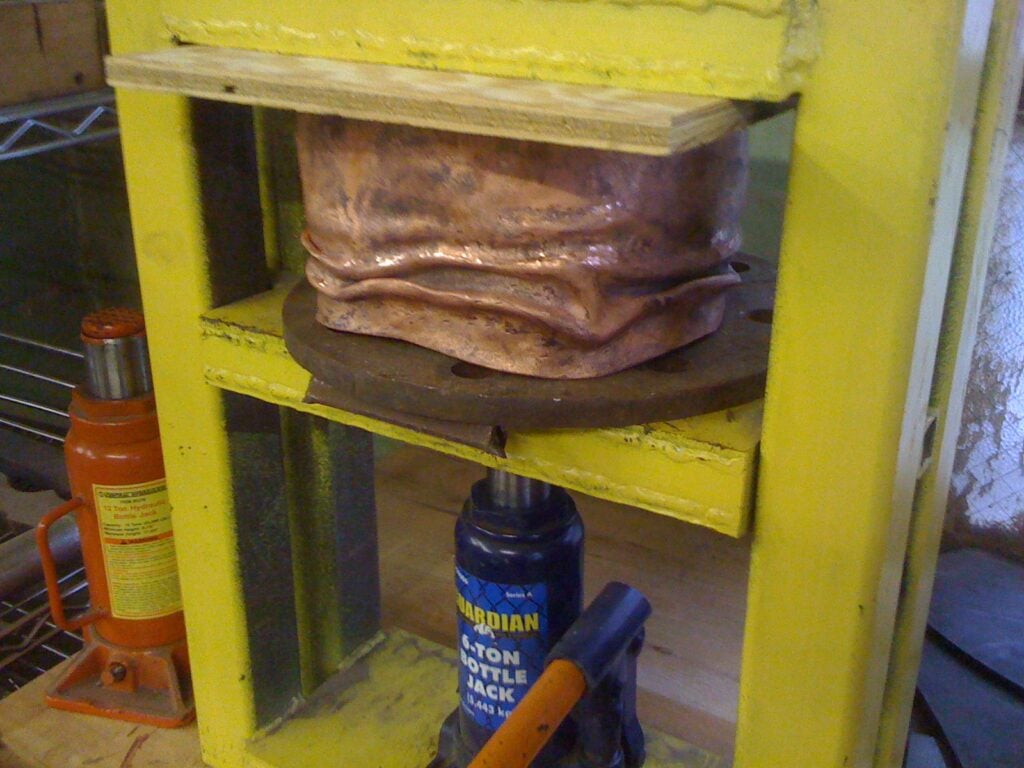
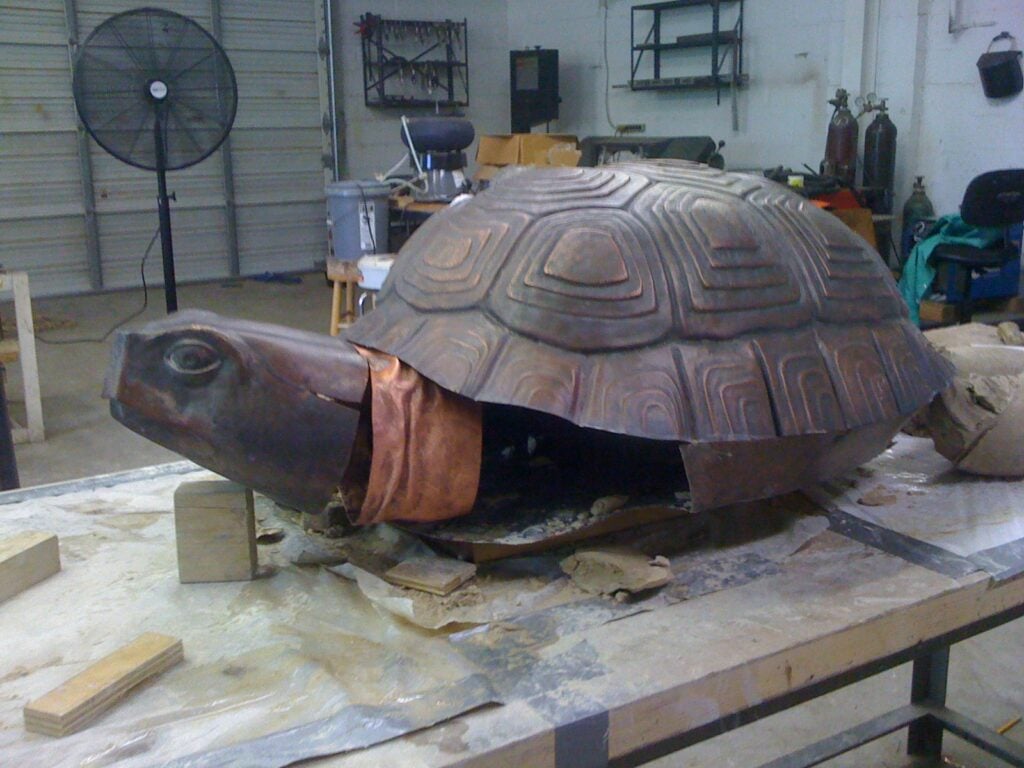
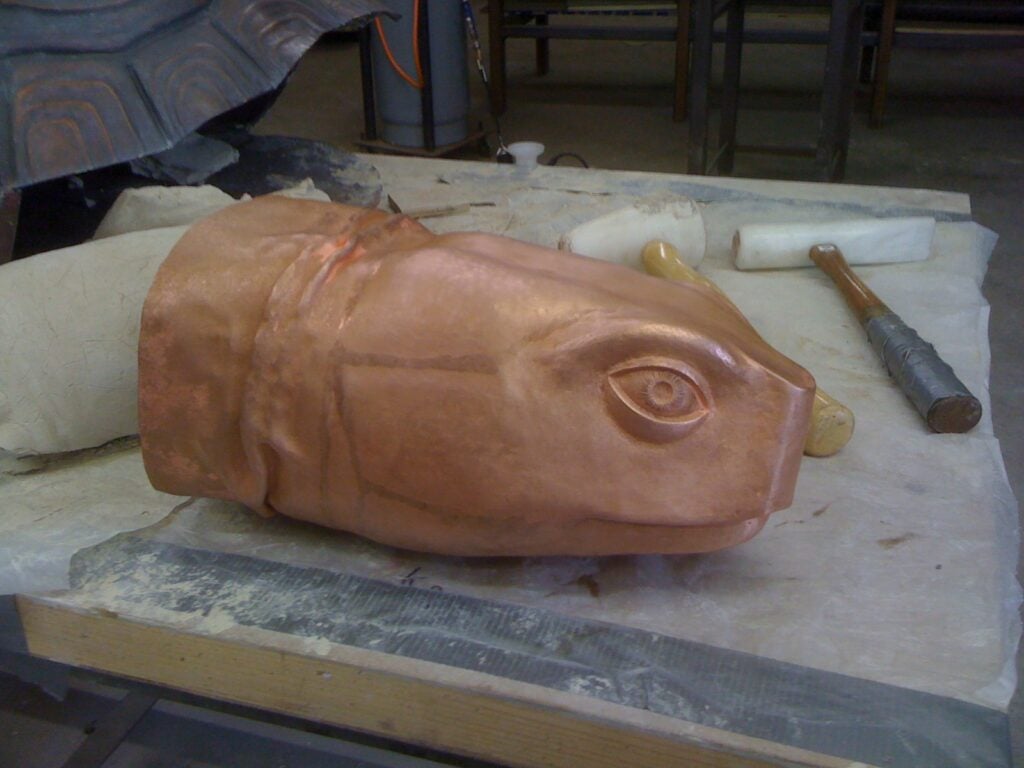
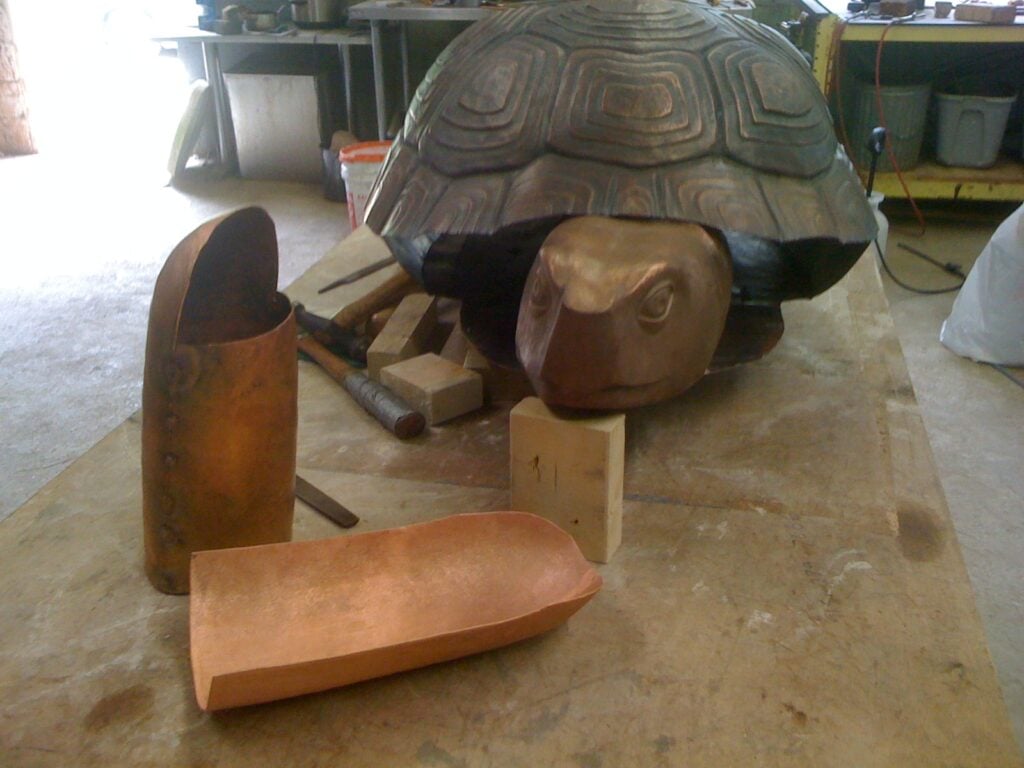
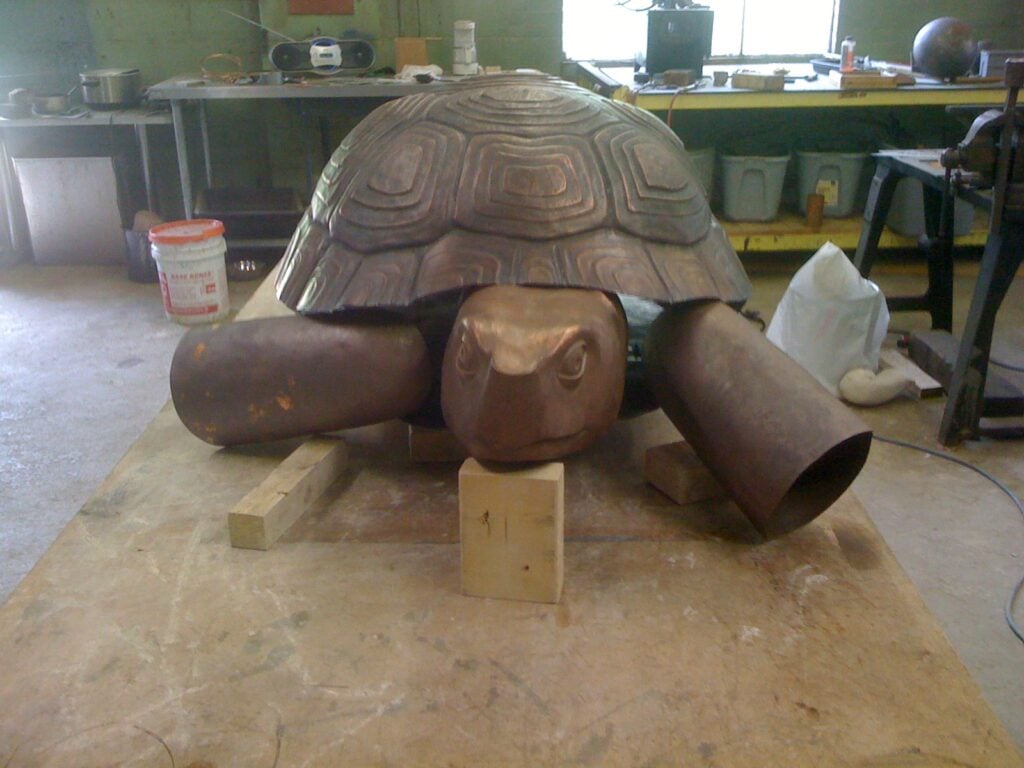
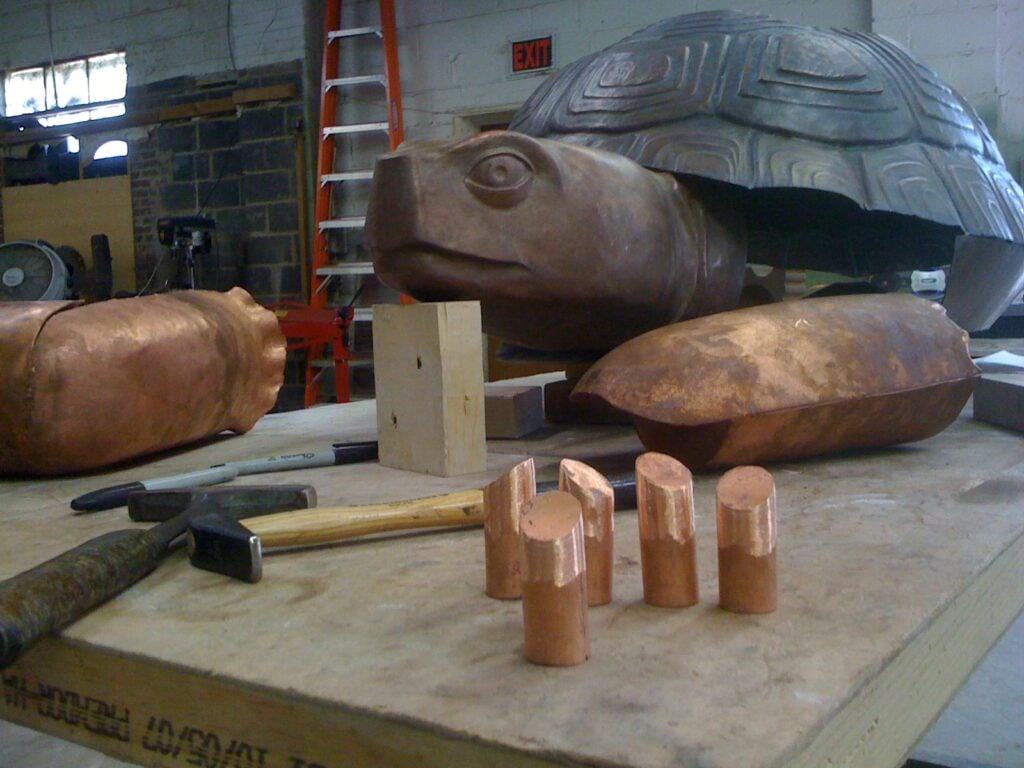
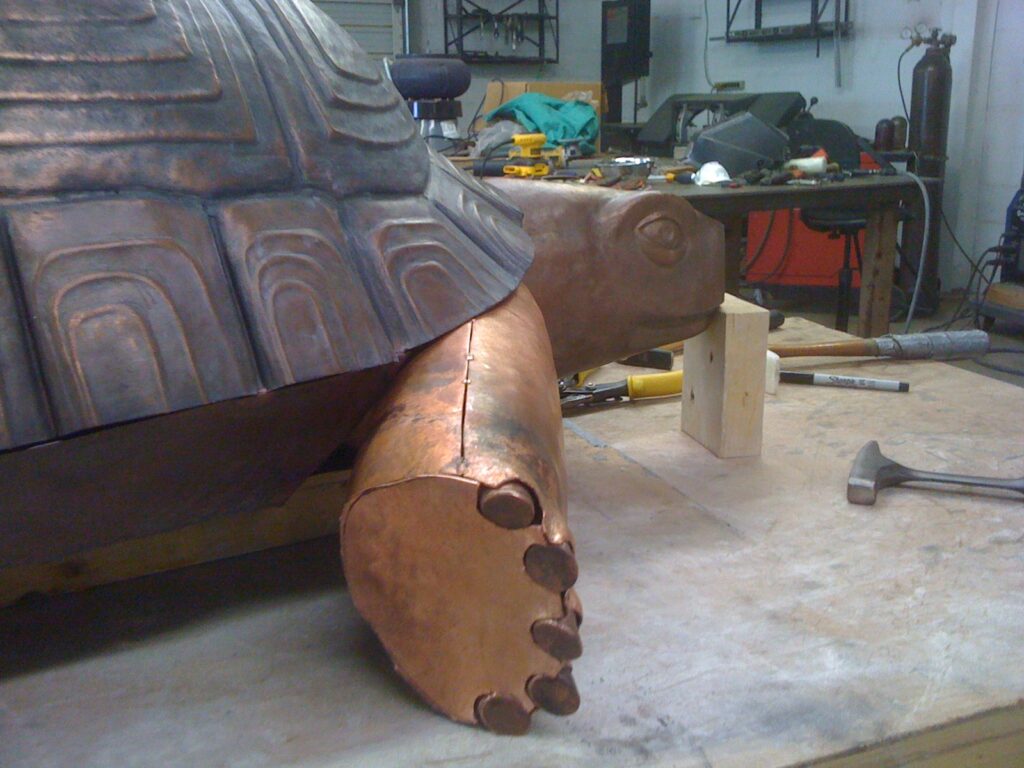
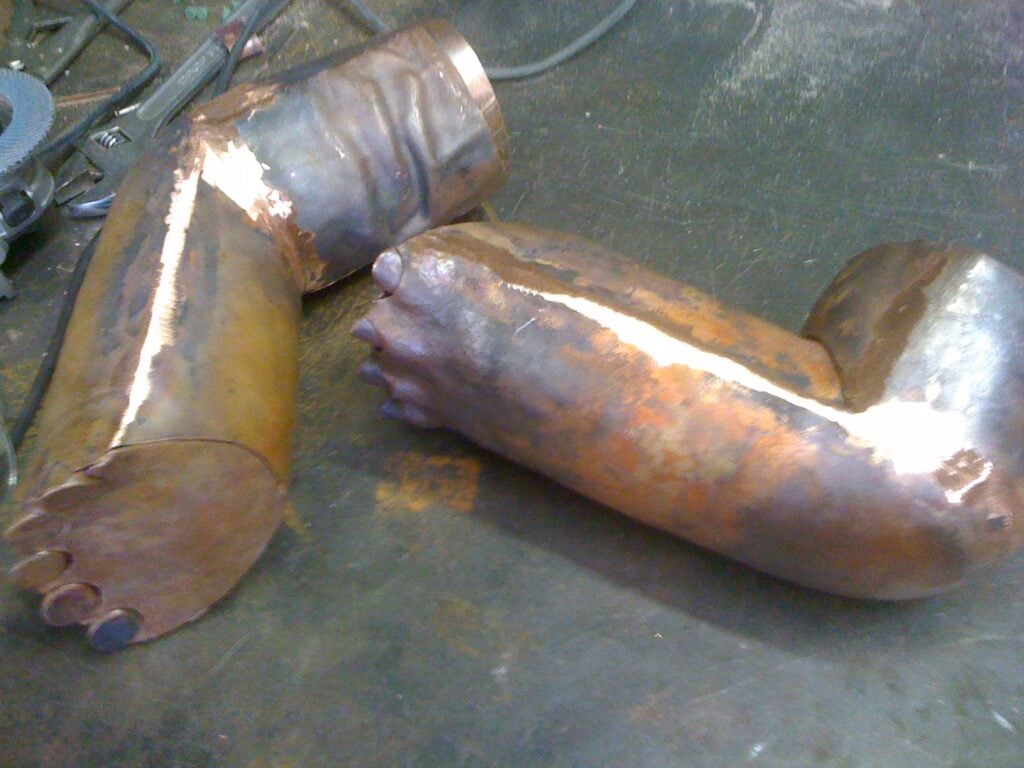
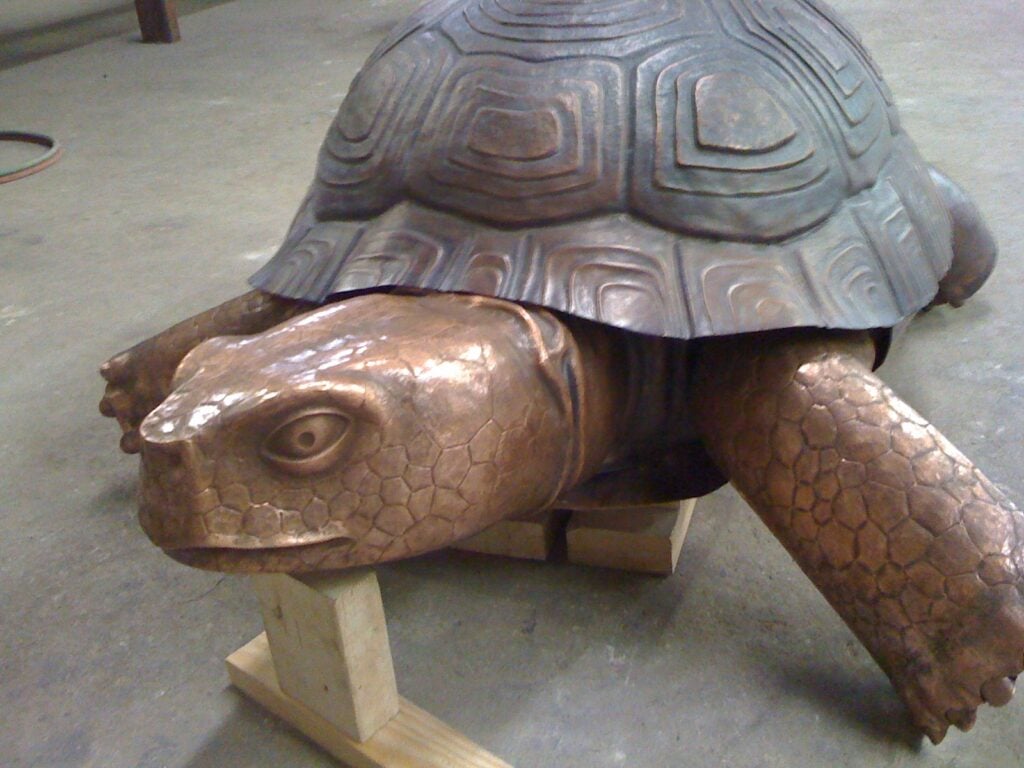
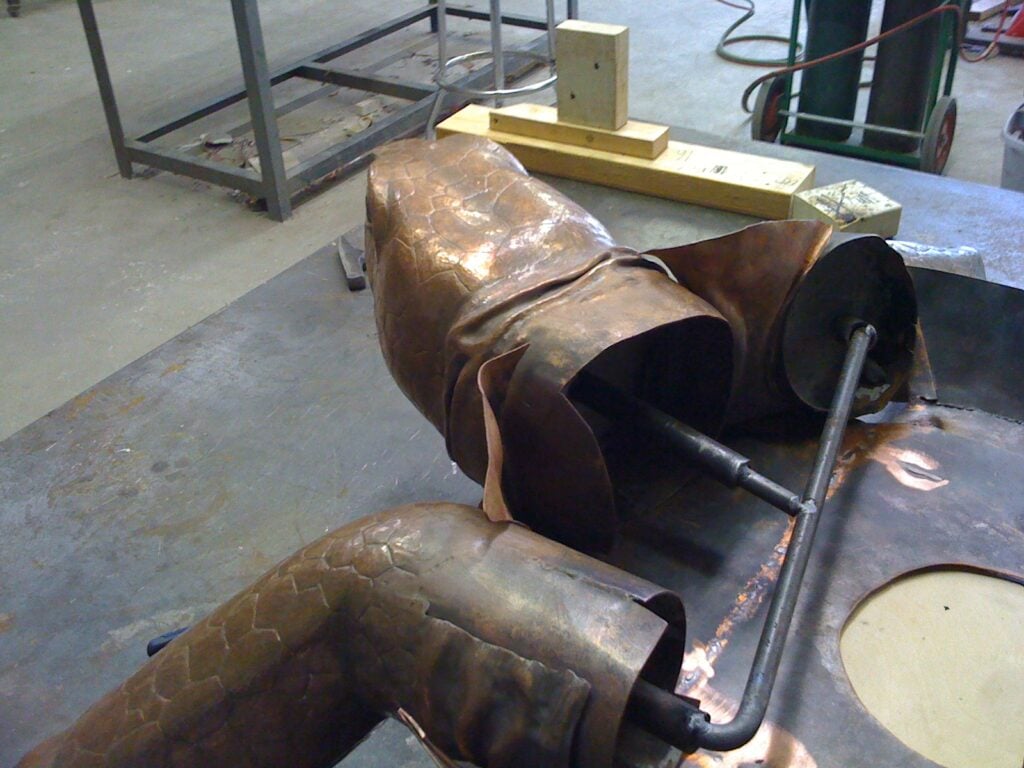
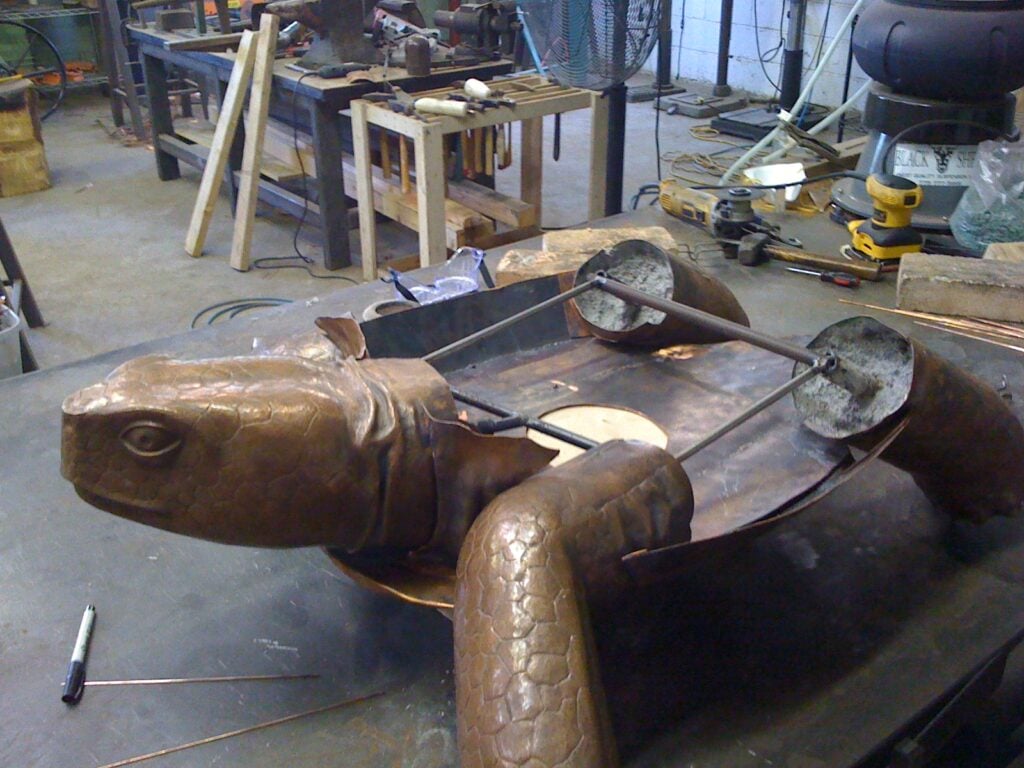
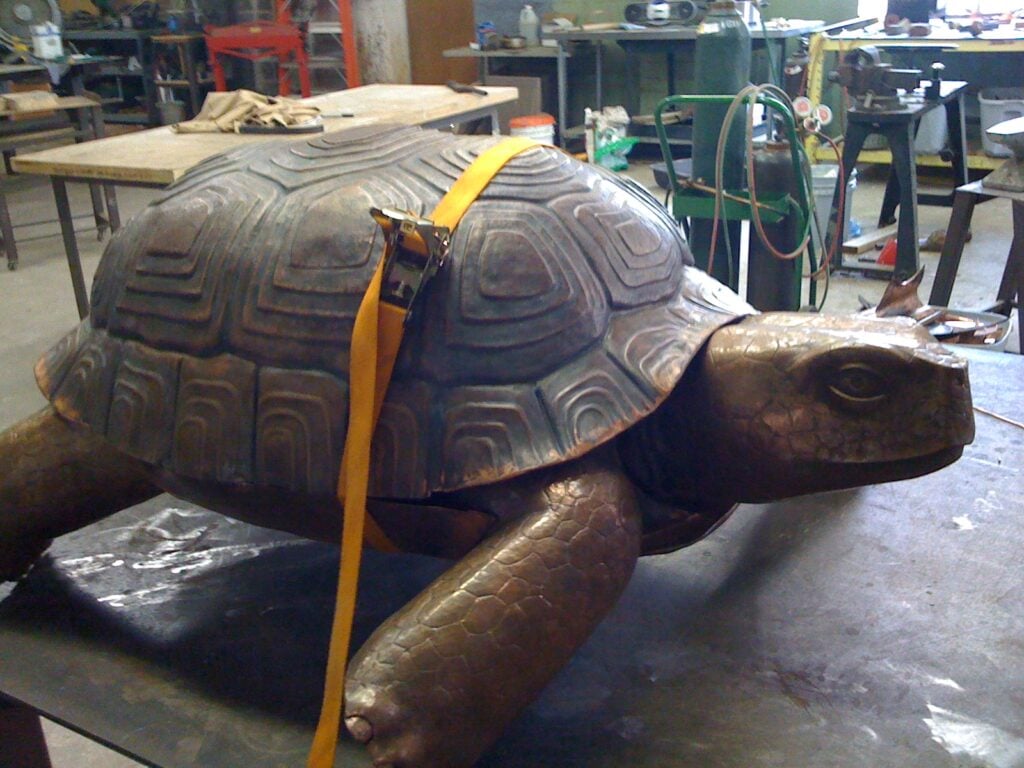
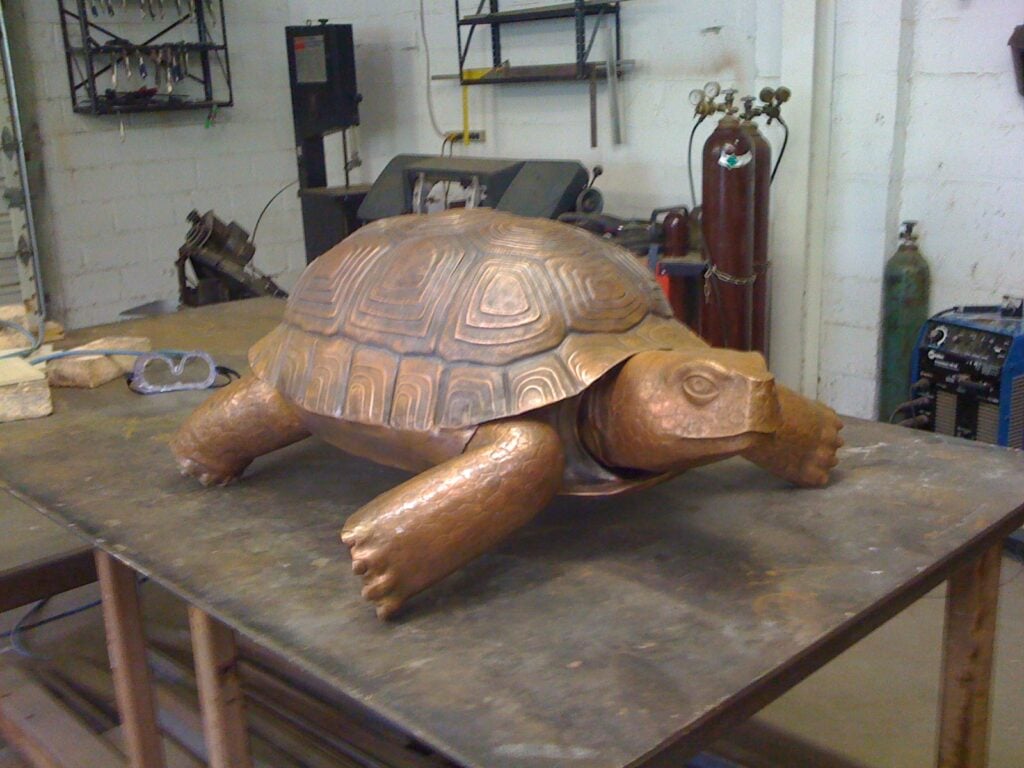
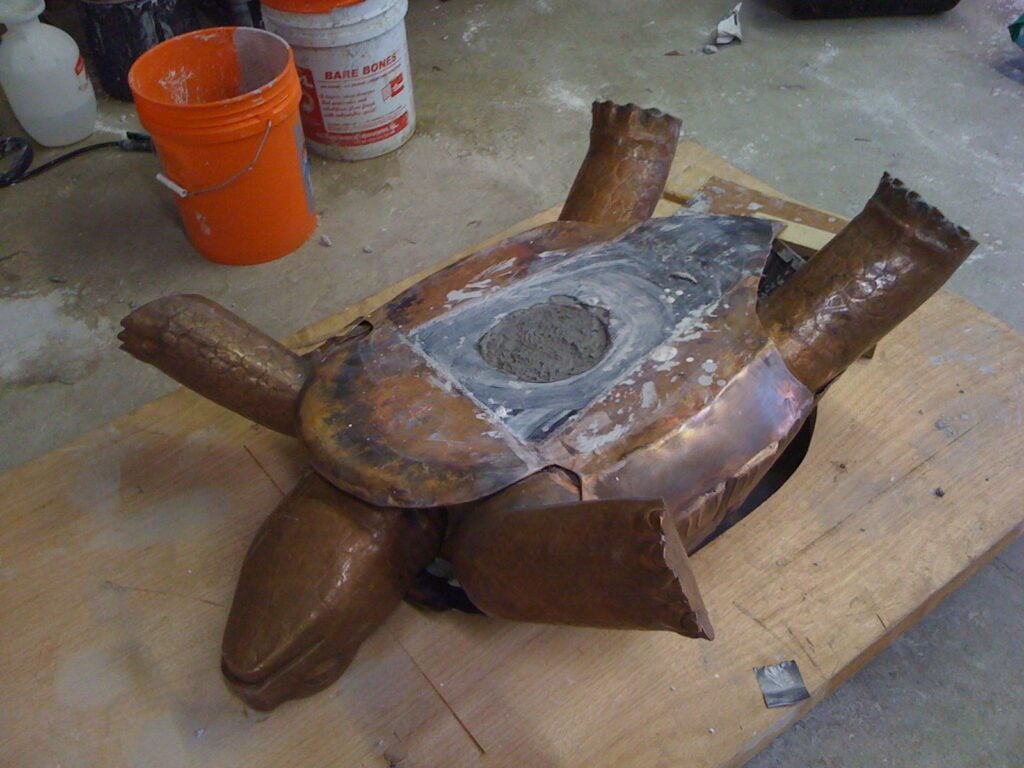
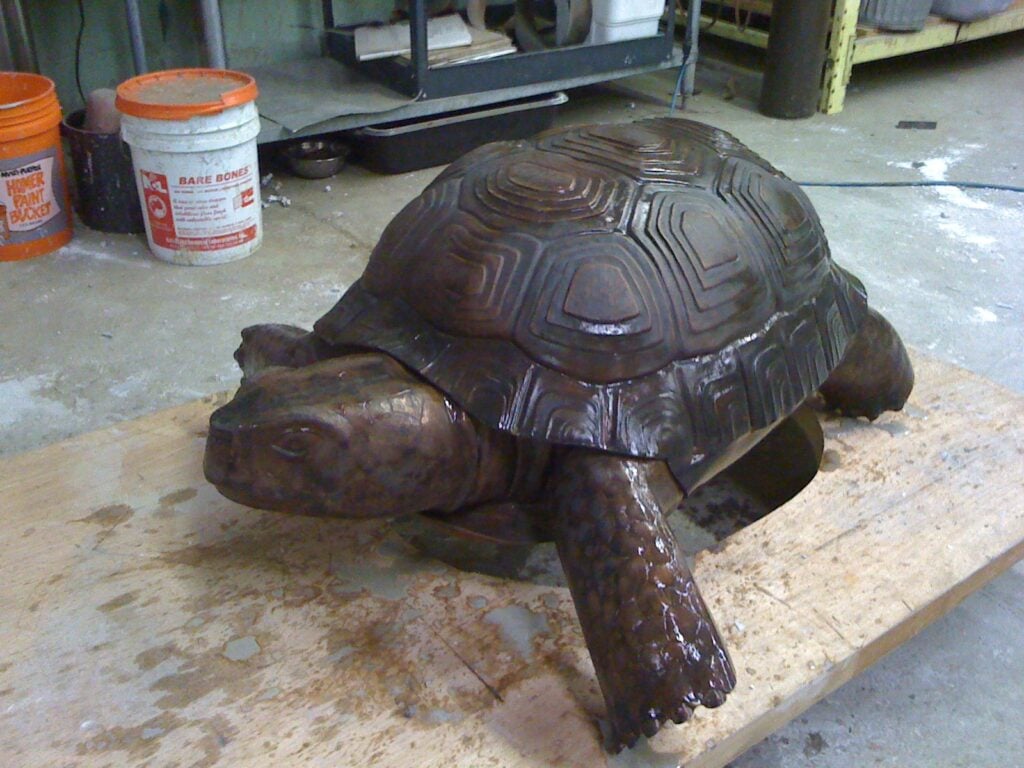
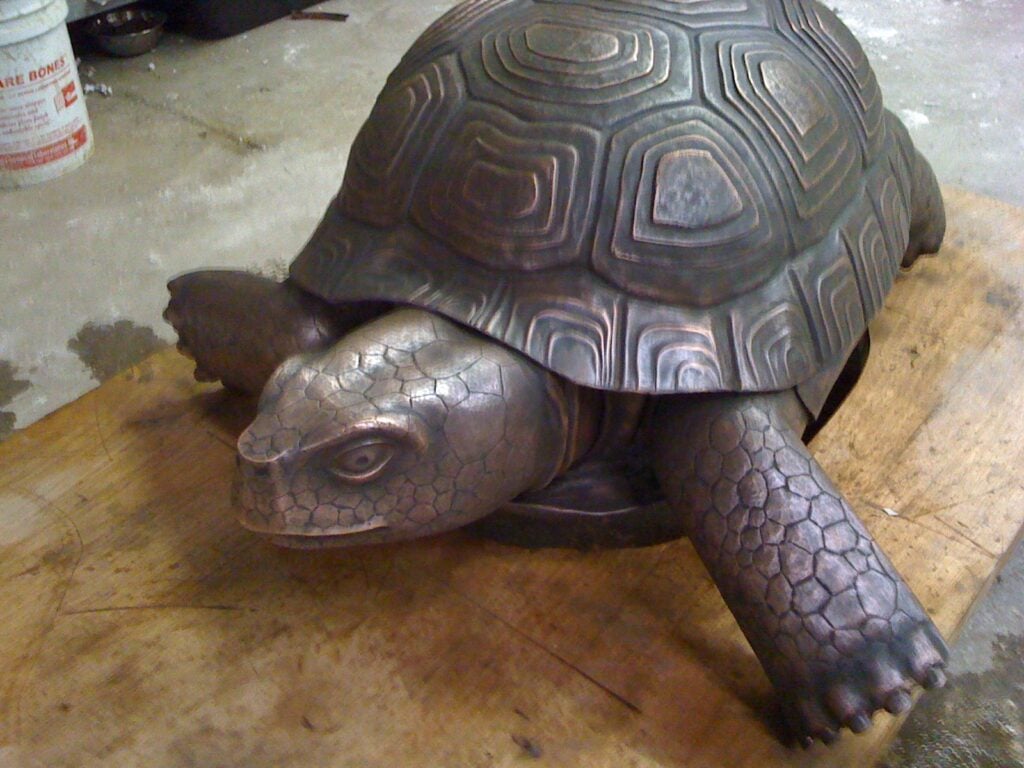
This 4-foot tortoise sculpture was made entirely from a single 4' x 8' sheet of 16-gauge copper. The shell was shaped into a high dome using mallets, softening the copper along the way to allow further forming. A clay-filled interior supported the shell as contours were shaped with pneumatic and hand held chasing tools, alternating between the front and back sides of the metal to build relief. The head, neck, limbs, and toes were modeled in clay to create templates for the metal. Sections were then built from copper sheet, hammered into form, and joined together by TIG welding. An internal steel armature provides added structure and support. The final piece was finished with a dark brown patina, followed by waxing to seal the surface while allowing for slow natural aging.